

I used to be firmly in the "toast and gravy" camp, and I had my reasons. Biscuits too often felt like a mouthful of heavy dough that sat there daring you to swallow.
Then I spent a weekend with a good friend who grew up on a cattle ranch, the kind of place where breakfast happens before daylight and nobody is interested in delicate portions. When I walked into her kitchen, she was stirring a cast iron skillet of sausage gravy and sliding a baking sheet of tall biscuits out of the oven, golden brown and smelling like somebody knew what they were doing.
Those were the first Whipping Cream Biscuits I ever had, and they changed my mind fast. They were light, flaky, and had a tender crumb that didn't feel heavy. When she told me the biscuit dough was just dry ingredients plus heavy whipping cream, I had to stare at her a second. That was it.
Here's the technique problem most people run into with traditional biscuits: the solid fats warm up, the dough gets overhandled, and you end up with tough, dense baked goods. The small method choice that fixes it is using heavy cream instead of cutting cold butter into purpose flour. The fat is already evenly distributed, so the mixing bowl part goes quicker and gentler.
I prefer to mix in a large bowl with a wooden spoon until the dough forms, then finish with a light hand on a lightly floured surface. If the dough looks shaggy and a little messy, you're in the right neighborhood.
This post may contain affiliate links. I may receive commissions for purchases made through links in this post.
The roots of this recipe
Cream biscuits are an American baking powder biscuit associated with the United States, especially the South, made with heavy cream in place of separate fat and liquid.
A widely documented early popularity point is James Beard's "cream biscuits," published in Beard on Bread (Knopf, 1973), which called out heavy cream as the distinguishing ingredient.
Marion Cunningham helped carry the idea into more home kitchens through her work on The Fannie Farmer Cookbook (13th edition, 1979), and she's noted as learning them through James Beard's cooking classes in Seaside, Oregon.
There isn't one for sure "first invented" moment that can be confirmed, but the heavy-cream approach caught on because it fit modern grocery staples and the postwar preference for faster home baking recipes that didn't require a pastry blender or food processor to be successful.
The Gist
Cook time: 12-13 minutes | Total time: 25 minutes
Yield: Serves 8-10
Skill level: Easy
Best for: Sausage gravy, breakfast plates, shortcake
Make-ahead friendly: Yes
Dietary notes: Vegetarian
What you'll learn: Heavy whipping cream replaces solid fats and liquid, so the flour mixture comes together fast without overworking the dough.
You Might Also Like


Why you'll love it
You get fluffy biscuits with a crisp exterior, and they don't land like a paperweight.
The ingredient list is short, and it's mostly pantry stuff plus the amount of cream.
They work whether you cut large biscuits with a biscuit cutter or go square with a sharp knife.
Leftovers reheat well, which matters more once you're not feeding three kids who can make a tray disappear before you sit down.
They also pull double duty: a good biscuit for dinner tonight, and a shortcake base when fruit shows up looking too good to ignore.
Kitchen Equipment
 Buy Now →
  Buy Now →
  Buy Now →
  Buy Now →
  Buy Now →
Shop my kitchen favorites
Visit my Amazon Store for the tools and staples I use most often.
Ingredients You'll Need
 Buy Now →
  Buy Now →
  Buy Now →
  Buy Now →
  Buy Now →
 Ingredient notes
Heavy whipping cream is doing the work of solid fats here, which is why the dough stays tender even without cold butter.
All-purpose flour is the right call; cake flour can make them softer, but it also makes the biscuit dough harder to handle when you're cutting and moving pieces.
Baking powder is the main leavening agents in this recipe, so if it's weak, the biscuits will be, too.
Melted butter on the outside gives you a nicer finish and helps the tops brown, especially if your oven runs cool.
Substitutions
- Self rising flour works if you skip the baking powder and kosher salt; it's a good shortcut, and you can even make your own self-rising flour if you're determined, but store-bought is usually more consistent.
- Half-and-half will work in place of heavy cream, but the crumb won't be as tender and the flavor won't be as full.
- I don't recommend swapping in low-fat milk. You'll still get a biscuit, but it won't have the same texture, and it tends to bake up drier.
- Unsalted butter is fine for dipping; just bump the salt in the dough a pinch if you like a more savory edge.
How to make
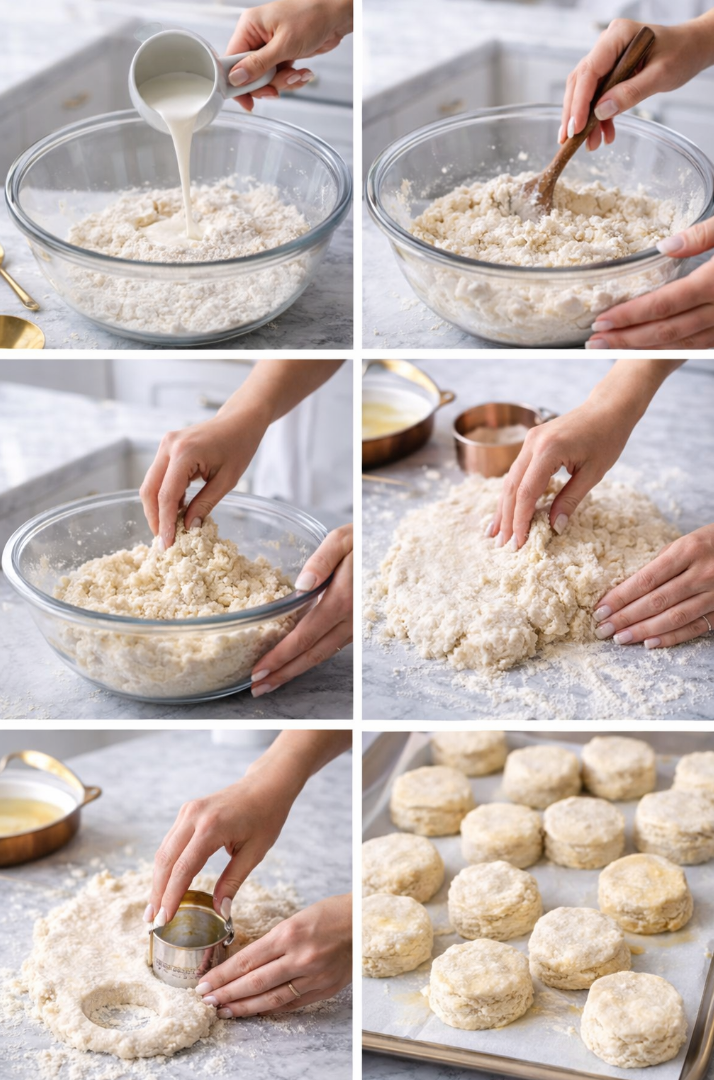
You'll mix the dry ingredients in a large bowl, then add heavy whipping cream and stir until the dough forms. The goal is a cohesive, slightly shaggy mass that holds together without turning smooth and tight.
From there, you'll pat dough on a lightly floured surface, cut it, dip, and place biscuits close together on the baking sheet. They bake hot until the tops are golden brown and the sides feel set when you tap them.
Timing & planning notes
Start with the oven preheating so you're not standing around with unbaked biscuits on the counter. This is a quick baking recipe, and the rhythm matters.
You can melt the butter while the oven heats and measure everything into a medium bowl if that helps your flow, but don't let the biscuit dough sit long once it's mixed. Mix, shape, first cutting, then straight to the sheet pan.
Let's get to cookin'
Preheat and set up
Heat the oven to 425°F and line your baking sheet if you want easier cleanup. Melt the butter and set it near your work area.
Mix the dry ingredients
In a large bowl, whisk together the flour, baking powder, sugar, and kosher salt until the flour mixture looks evenly blended.
Add the cream
Pour in the heavy whipping cream and stir with a wooden spoon just until the dough forms; you should still see a few rough bits, not a smooth batter.
Bring the dough together
Turn the biscuit dough onto a lightly floured surface with a little flour and give it a gentle knead a few times, just until it holds together.
Pat and cut
Pat dough to about ½ inch thick, then cut with a biscuit cutter or use a sharp knife for squares; clean edges help the biscuits rise.
Butter and place biscuits
Dip both sides in melted butter, then place biscuits close together on the baking sheet so they climb upward instead of spreading.
Bake
Bake 12-13 minutes, until the tops are golden brown and the sides feel firm; the bottoms should release easily when you lift one.
The Process
Chef's tips for Whipping Cream Biscuits
- Use cold cream so the fat stays where it belongs and you get a tender crumb.
- Stop stirring early the moment the dough forms; that last extra minute is where toughness sneaks in.
- Pat dough, don't roll dough because rolling adds pressure and can compact the layers you want.
- Cut straight down with the biscuit cutter; twisting can seal edges and shorten the rise.
- Bake on the right rack so you get a crisp exterior without scorching the bottoms; the middle rack usually behaves best.
Troubleshooting
- Biscuits are heavy: The dough was mixed too much or got too much flour; mix just until cohesive and use only a lightly floured surface.
- Biscuits didn't rise: Baking powder may be old or the oven wasn't fully heated; replace the leavener and wait until the oven hits correct temperature. Also be sure to place the raw biscuits so close together that they are almost touching -this will force them up instead of out.
- Biscuits browned too fast underneath: The pan is too dark or the rack is too low; switch to a lighter cookie sheet and move the rack up one level.
What to serve it with
Sausage Gravy
Sausage Patties
Make ahead & freezing
For unbaked biscuits, cut them and freeze them on a baking sheet until firm, then transfer to a freezer bag. Bake from frozen and add a couple minutes, watching for golden brown tops and set sides.
For baked biscuits, cool completely, wrap well, and freeze up to two months. Reheat in a 325°F oven until warmed through; the microwave works, but it softens the crisp exterior.
FAQs
Can I make these as drop biscuits?
You can, but you'll need to adjust the amount of cream so the dough is scoopable. This version is designed for cutting, which gives you taller biscuits.
Do I need room temperature ingredients?
No. Cold cream is helpful here, and room temperature isn't the goal the way it is in some baked goods.
Can I turn these into shortcake?
Yes. Increase the sugar to 3 tablespoons, press the butter-dipped tops into coarse sugar, and bake as usual.
Why are my biscuits tough even when I'm careful?
It's usually too much flour on the counter or too much handling. Use a little flour, move quickly, and stop as soon as it's together.
Leftovers & storage
Store biscuits in an airtight container at room temperature for up to 2 days or refrigerate up to 4 days.
Reheat in the oven so the outside perks back up and the inside stays tender.
Stick around for seconds!
If you're in a breads-and-gravy season of life (or just cooking for two now), there are plenty more recipes to browse in the bread category.
Tried it?
Leave a rating, drop a quick comment, or tell me if you went gravy or honey. I read every one.

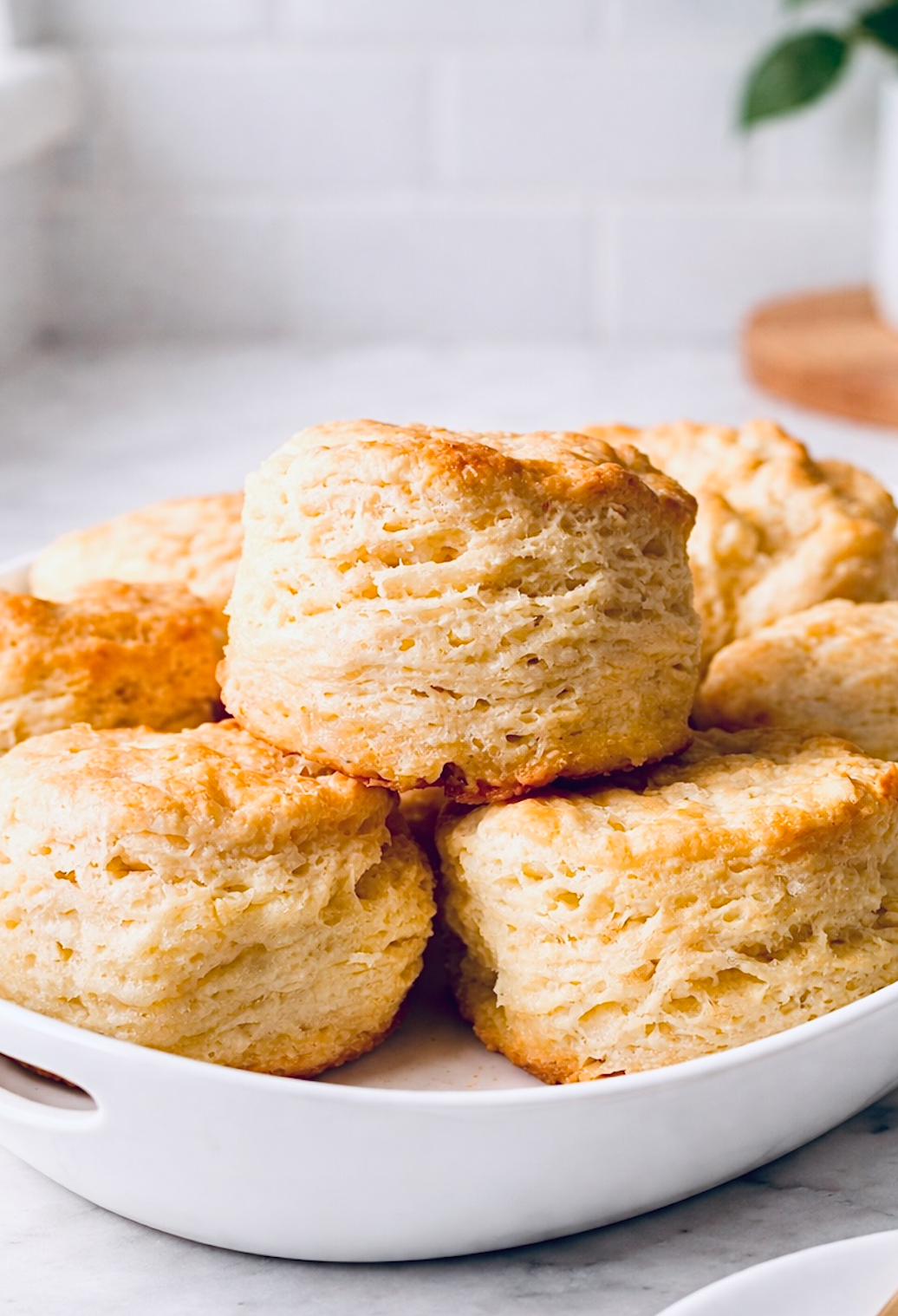
Whipping Cream Biscuits
Ingredients
- 2 cups all-purpose flour
- 1 teaspoon kosher salt
- 1 teaspoon granulated sugar
- 4 teaspoons baking powder
- 1 ½ cups heavy whipping cream
- 4 tablespoons salted butter melted (½ stick)

Instructions
Prepare the Oven and Pan
- Preheat oven to 425°F.
- Line a baking sheet with parchment paper or leave ungreased.
Make the Dough
- In a large mixing bowl, combine the flour, salt, sugar, and baking powder.2 cups all-purpose flour, 1 teaspoon kosher salt, 1 teaspoon granulated sugar, 4 teaspoons baking powder
- Pour in the whipping cream.1 ½ cups heavy whipping cream
- Stir just until a soft dough forms.
- Turn dough out onto a lightly floured surface and gently knead a few times until cohesive, avoiding overmixing.
Shape the Biscuits
- Pat the dough to about ½-inch thickness.
- Cut into rounds or squares using a biscuit cutter or knife.
- Dip the top and bottom of each biscuit into the melted butter.4 tablespoons salted butter
Bake
- Arrange biscuits close together (almost touching) on the prepared baking sheet.
- Bake until lightly golden and set, 12-13 minutes.
- Serve warm.
Shortcake Variation
- Increase sugar in the dough to 3 tablespoons.
- Sprinkle biscuit tops with coarse sugar before baking.
- To serve, split biscuits in half and top with sweetened fresh strawberries or peaches and lightly sweetened whipped cream.
Notes
- All-purpose flour may be replaced with self-rising flour; omit salt and baking powder if using.
- Heavy whipping cream can be replaced with full-fat half-and-half, though biscuits will be slightly less rich.
- Unsalted butter may be used; increase salt slightly if desired.
- Serve with sausage gravy, butter, honey, or fruit preserves.
- Pair with soups, stews, or breakfast dishes like eggs and sausage.
- Store baked biscuits in an airtight container at room temperature for up to 2 days or refrigerate for up to 4 days.
- Freeze unbaked, cut biscuits on a baking sheet, then transfer to a freezer bag for up to 2 months. Bake from frozen, adding 2-3 minutes to baking time.
- Baked biscuits may also be frozen for up to 2 months and reheated in a 325°F oven until warmed through.
Nutrition
*Nutrition information is automatically calculated based on ingredient data and should be considered an estimate. When multiple ingredient options are provided, the first listed is used for calculation. Optional ingredients and garnishes are not included in the nutrition analysis.






Karen says
These biscuits are very good. They are quick to make and so much easier than grating butter.
Jennifer says
Hi Karen! Thank you! I'm so glad you enjoyed them. That's one of my favorite things about this recipe, too—no cutting or grating butter, just stir everything together and you're on your way. I really appreciate you taking the time to leave a comment!