

I grew up in Clear Lake, about forty-five minutes north of Galveston, which meant Mardi Gras wasn't some romantic New Orleans postcard. It was right there on the Strand. Two solid weeks of parades, balcony parties, costumes, and a whole lot of people making choices they would not be proud of by Ash Wednesday.
If you showed up in late January or early February, King Cakes were everywhere. Grocery stores. Bakeries. Office break rooms. Somebody's aunt always brought one, even if nobody asked. And somewhere inside was that little plastic baby-equal parts good luck and mild panic-because whoever found it was suddenly on the hook to host the next party. You know, to keep the good times rolling. Prosperity, yes. Responsibility, also yes.
Galveston did Mardi Gras with passion. Beads flew. Music blared. And once the sun went down, the crowd shifted. More than a few boobs were flashed after dark, once the grown-ups thought nobody was paying attention. Not subtly. Not accidentally. Just confidently-like this was a perfectly reasonable exchange rate for plastic necklaces. It was rowdy. It was loud. Good times absolutely rolled, and nobody pretended otherwise.
What fascinated me, even then, was how King Cake threaded through all of it. Amid the noise and chaos, there it was-sweet, sticky, slightly lopsided-waiting to be sliced. Once a King Cake was unboxed, everyone leaned in a little closer. Everyone suddenly cared, quietly watching to see who'd get the baby. It was festive and ridiculous and oddly grounding all at once.
These days, Mardi Gras looks different. I live in Central Texas now, where most people don't really celebrate it or know much about it beyond the beads. But this King Cake still feels tied to those memories-just sweet, indulgent, and meant to be shared. It's rich brioche dough, a proper cinnamon filling, and enough cake to feed a crowd, whether they earned it with parade beads or just showed up for a slice.
It's called Fat Tuesday for a reason. You live it up a little. You eat the cake. And then you deal with the consequences later. "Laissez les bons temps rouler"!
This post may contain affiliate links. I may receive commissions for purchases made through links in this post.
The Roots of This Recipe
King Cake is a ring-shaped pastry tied to Catholic Epiphany, traditionally celebrated on January 6, also known as King's Day. The holiday marks the visit of the Wise Men, which is where the symbolic bean-or later, a tiny baby figurine-comes into play.
The tradition traveled from Europe to Louisiana with French settlers in the 18th century. Early versions were closer to bread than cake, often plain and lightly sweetened, baked to mark the beginning of Carnival season.
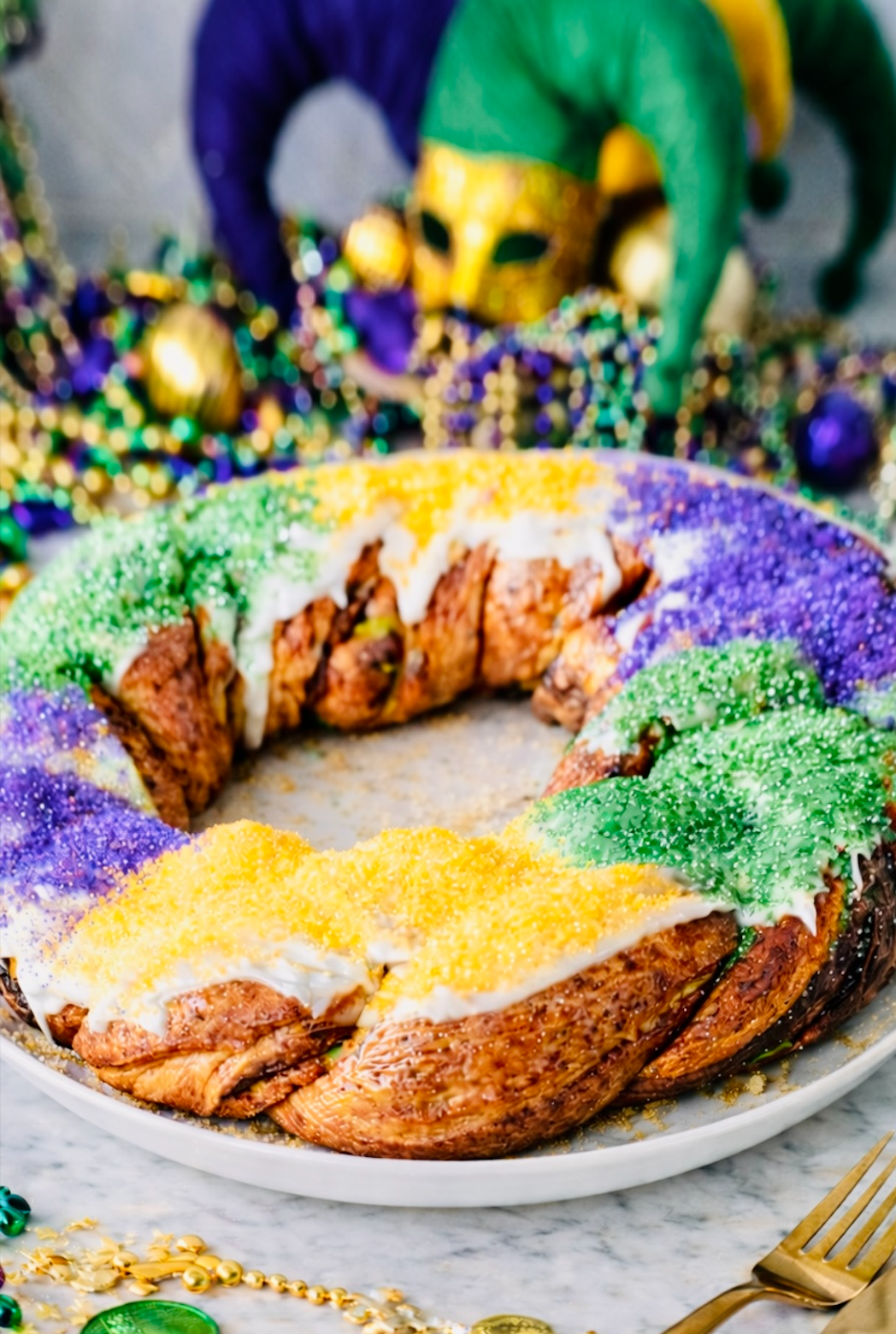
By the mid-20th century, Louisiana-style king cakes evolved into the richer, brioche-based versions most people recognize today, topped with gold sugar and the traditional Mardi Gras colors of purple, green, and yellow. Bakeries in New Orleans popularized filled versions, especially during the stretch between Twelfth Night and Ash Wednesday.
Today, king cake season runs through Mardi Gras celebrations along the Gulf Coast, with each slice carrying the promise of good luck-and the responsibility of hosting the next king cake party along with the next cake.
The Gist
Cook time: 25-30 minutes | Total time: About 3½-4 hours
Yield: Serves 16-20
Skill level: Intermediate
Best for: Mardi Gras season, Fat Tuesday, Carnival gatherings
Make-ahead friendly: Yes
Dietary notes: Vegetarian
What you'll learn: How proper dough texture and timing create a soft, traditional king cake
You Might Also Like
Why You'll Love It
• Makes two full cakes-enough for a lot of people
• Rich brioche dough stays soft for days
• Classic cinnamon filling with balanced sweetness
• Ideal for Mardi Gras tradition without bakery prices
• Leftovers hold up well for morning coffee
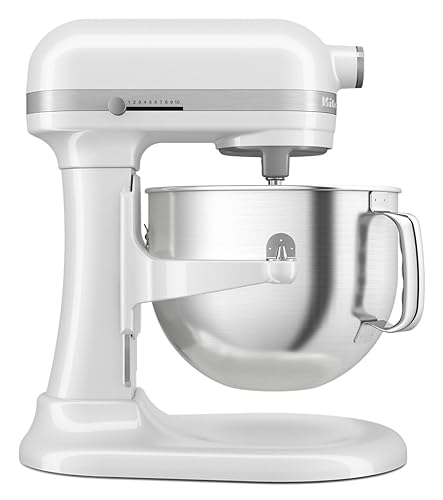
Kitchen Equipment
 Buy Now →
  Buy Now →
  Buy Now →
  Buy Now →
  Buy Now →
  Buy Now →
Shop my kitchen favorites
Visit my Amazon Store for the tools and staples I use most often.
Ingredients You'll Need
 Buy Now →
  Buy Now →
  Buy Now →
  Buy Now →
  Buy Now →
  Buy Now →
  Buy Now →
  Buy Now →
  Buy Now →
  Buy Now →
  Buy Now →
  Buy Now →
  Buy Now →
  Buy Now →
 Ingredient Notes
• Brioche dough relies on proper gluten development-kneading matters
• Cinnamon filling should be crumbly, not wet
• Vanilla bean paste adds depth but isn't overpowering
• Sanding sugar holds color better than granulated sugar
Substitutions
• Vanilla extract can replace vanilla bean paste
• Instant yeast works with adjusted mixing order
• Unsalted butter is fine with added salt
• Cream cheese filling can replace cinnamon, with a softer texture
How to make
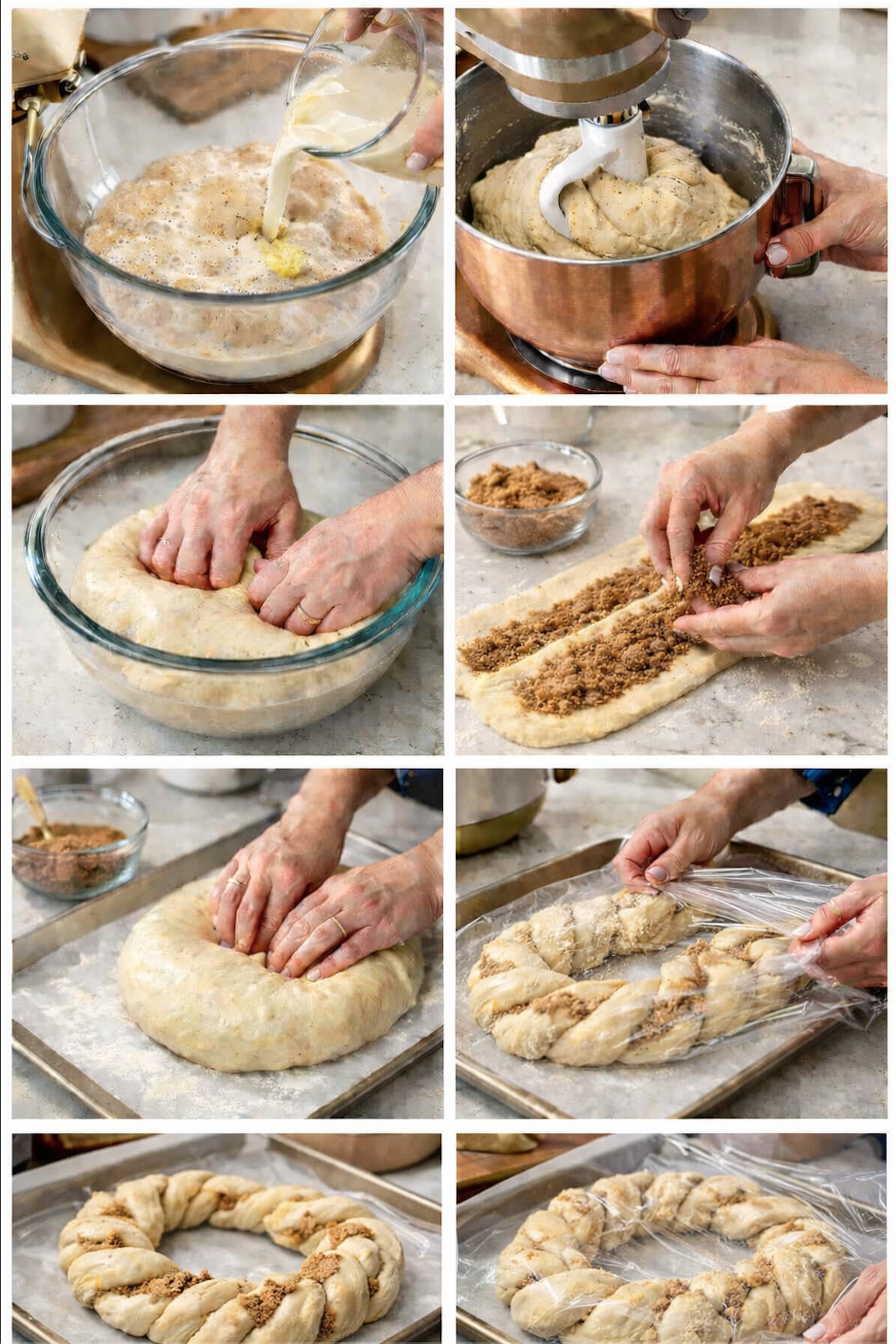
This recipe follows a familiar rhythm: mix, knead, rise, fill, shape, rise again, then bake. The dough benefits from patience, especially during the first rise, when flavor and structure develop together.
Once baked, the cakes need to cool completely before frosting. That pause matters-warm cake will melt the glaze and dull the finish.
Timing & planning notes
Plan for about half a day from start to finish, with most of that time hands-off. The dough can be made ahead and refrigerated overnight, which works well if you're baking for a next-day celebration.
King cake is best served the day it's frosted but holds well into the next morning.
Let's get to cookin'
Warm the dairy
Heat the milk and butter until just warm, then stir in salt and let cool slightly.
Activate the yeast
Combine warm water, a bit of sugar, and yeast until foamy.
Mix the dough
Add remaining sugar, eggs, vanilla, and flour gradually, kneading until soft and elastic.
First rise
Cover and let rise until doubled and airy.
Prepare the filling
Mix sugars, flour, cinnamon, and melted butter until crumbly.
Shape the cakes
Roll, fill, twist, and form into rings.
Second rise
Let the shaped cakes puff slightly before baking.
Bake
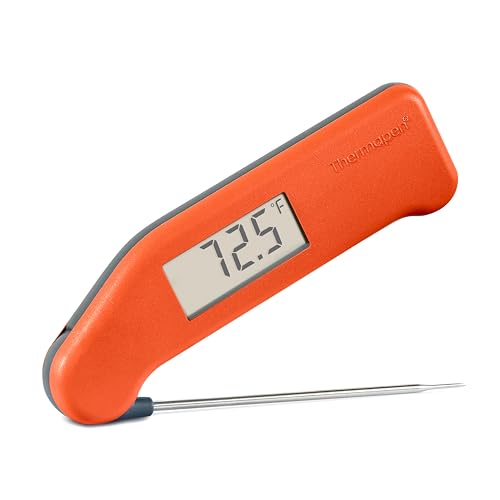
Bake until golden and the internal temperature reaches 190-195°F.
Finish
Cool completely, glaze, decorate, and hide the small plastic baby.
The Process
Ingredient notes
• Brioche dough relies on proper gluten development-kneading matters
• Cinnamon filling should be crumbly, not wet
• Vanilla bean paste adds depth but isn't overpowering
• Sanding sugar holds color better than granulated sugar
Substitutions
• Vanilla extract can replace vanilla bean paste
• Instant yeast works with adjusted mixing order
• Unsalted butter is fine with added salt
• Cream cheese filling can replace cinnamon, with a softer texture
How to make
This recipe follows a familiar rhythm: mix, knead, rise, fill, shape, rise again, then bake. The dough benefits from patience, especially during the first rise, when flavor and structure develop together.
Once baked, the cakes need to cool completely before frosting. That pause matters-warm cake will melt the glaze and dull the finish.
Timing & planning notes
Plan for about half a day from start to finish, with most of that time hands-off. The dough can be made ahead and refrigerated overnight, which works well if you're baking for a next-day celebration.
King cake is best served the day it's frosted but holds well into the next morning.
Let's get to cookin'
Warm the dairy
Heat the milk and butter until just warm, then stir in salt and let cool slightly.
Activate the yeast
Combine warm water, a bit of sugar, and yeast until foamy.
Mix the dough
Add remaining sugar, eggs, vanilla, and flour gradually, kneading until soft and elastic.
First rise
Cover and let rise until doubled and airy.
Prepare the filling
Mix sugars, flour, cinnamon, and melted butter until crumbly.
Shape the cakes
Roll, fill, twist, and form into rings.
Second rise
Let the shaped cakes puff slightly before baking.
Bake
Bake until golden and the internal temperature reaches 190-195°F.
Finish
Cool completely, glaze, decorate, and hide the small plastic baby.

King Cake Recipe
Ingredients
Dough
- 1 cup milk
- 1¼ teaspoons kosher salt
- ¼ cup salted butter
- ⅔ cup warm water 110°F-115°F
- ½ cup granulated sugar divided
- 1 tablespoon active dry yeast
- 2 large eggs beaten
- 2 teaspoons vanilla bean paste
- 5 to 5½ cups all-purpose flour spooned and leveled
Cinnamon Filling
- ⅔ cup brown sugar
- ⅓ cup granulated sugar
- ½ cup all-purpose flour
- 2 teaspoons ground cinnamon
- 4 tablespoons salted butter melted
Frosting
- 2 cups powdered sugar
- 3 tablespoons milk
- 1 tablespoon salted butter melted
- 1 teaspoon lemon juice
- 1 teaspoon vanilla bean paste
- ½ cup Purple Sanding Sugar
- ½ cup Green Sanding Sugar
- ½ cup Gold Sanding Sugar

Instructions
Prepare the Dough
- Heat the milk and butter together in a microwave-safe bowl until the butter is melted and the mixture is warm, about 60-90 seconds.1 cup milk, ¼ cup salted butter
- Stir in the salt and set aside to cool until just warm to the touch (about 120°F-130°F).1¼ teaspoons kosher salt
- In a separate bowl, combine the warm water, about 1 tablespoon of the sugar, and the yeast. Stir and let stand 5-10 minutes, until foamy.
- Add the milk mixture, remaining sugar, eggs, and vanilla to the yeast mixture.2 large eggs, 2 teaspoons vanilla bean paste
- Mix in 1 cup of the flour until combined.
- Continue adding flour, about 1 cup at a time, mixing and kneading until a very soft dough forms and begins pulling away from the sides of the bowl. Add the remaining ½ cup flour only if the dough is excessively sticky.5 to 5½ cups all-purpose flour
- Knead with a dough hook on medium speed for about 5 minutes, or knead by hand for 8-10 minutes, until smooth and elastic.
- Shape the dough into a ball, place in a lightly oiled bowl, turn to coat, and cover.
- Let rise in a warm place until doubled in size, 1-2 hours.
Make the Cinnamon Filling
- Combine the brown sugar, granulated sugar, flour, cinnamon, and melted butter in a bowl.⅔ cup brown sugar, ⅓ cup granulated sugar, ½ cup all-purpose flour, 2 teaspoons ground cinnamon, 4 tablespoons salted butter
- Mix until evenly blended and crumbly.
- Set aside.
Shape the King Cakes
- Line two baking sheets with parchment paper.
- Punch down the risen dough and divide it in half.
- Roll one half into a rectangle approximately 10 × 16 inches on a lightly floured surface.
- Cut the rectangle lengthwise into two long strips.
- Sprinkle the cinnamon filling evenly over both strips.
- Roll each strip tightly into a log, seam side down.
- Twist the two logs together to form a braid, then shape into an oval and pinch the ends to seal.
- Transfer to a prepared baking sheet.
- Repeat with the remaining dough and filling.
- Cover loosely and let rise until puffy, 30-45 minutes.
Bake
- Preheat the oven to 350°F.
- Bake the king cakes for 25-30 minutes, until golden brown and baked through.
- An internal temperature of 190°F-195°F indicates doneness.
- Cool completely before frosting.
Prepare the Frosting
- 2 cups powdered sugar, 3 tablespoons milk, 1 tablespoon salted butter, 1 teaspoon lemon juice, 1 teaspoon vanilla bean paste
- Adjust with additional milk if needed to achieve a thick but pourable consistency.
Finish and Serve
- Insert a small plastic baby into the underside of each cake, if using.
- Drizzle the frosting over the cooled cakes and spread gently if needed.
- Decorate with purple, green, and gold sanding sugar while the frosting is still wet.
- Slice and serve.
Notes
- Unsalted butter may be used; increase salt by ¼ teaspoon in the dough.
- If dough is too sticky, begin adding more flour ¼ cup at a time until the desired consistency is reached.
- Vanilla extract can replace vanilla bean paste in equal amounts.
- Instant yeast may be substituted for active dry yeast; mix it directly with the flour and sugar and proceed without proofing.
- Serve with coffee, café au lait, or hot chocolate.
- Pairs well with fresh fruit or any brunch offerings.
- Store covered at room temperature for up to 2 days or refrigerate for up to 1 week.
- Bring to room temperature before serving for best texture.
- Fully baked and unfrosted king cakes may be frozen for up to 2-3 months.
- Wrap tightly in plastic wrap and place in an airtight container.
- Thaw at room temperature, then frost and decorate before serving.
Nutrition
*Nutrition information is automatically calculated based on ingredient data and should be considered an estimate. When multiple ingredient options are provided, the first listed is used for calculation. Optional ingredients and garnishes are not included in the nutrition analysis.



Comments
No Comments