
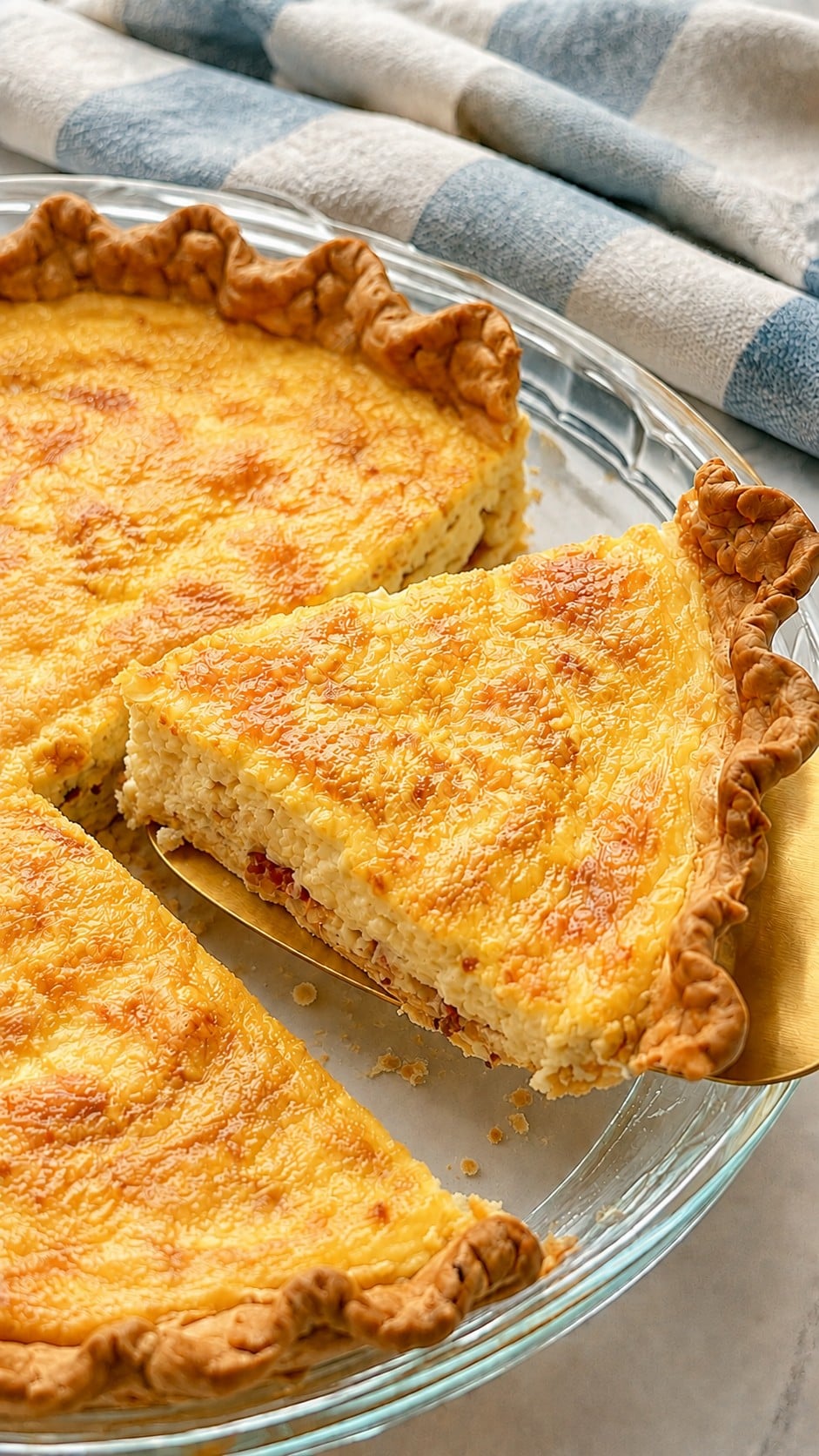
This classic Quiche Lorraine recipe folds crisp bacon, sweet sautéed onion, nutty Gruyère, and Parmesan into a silky cream custard, all held by a flaky blind-baked crust. It feels special enough for brunch, but every step is practical: cook the bacon first, soften the onion in a little of the drippings, and lower the oven temperature before the custard goes in.

The blind bake is what keeps the bottom crust from turning soft under the rich filling. If you are making pastry from scratch, start with my buttery, flaky pie crust; for a deeper technique guide, see how to blind bake a pie crust.
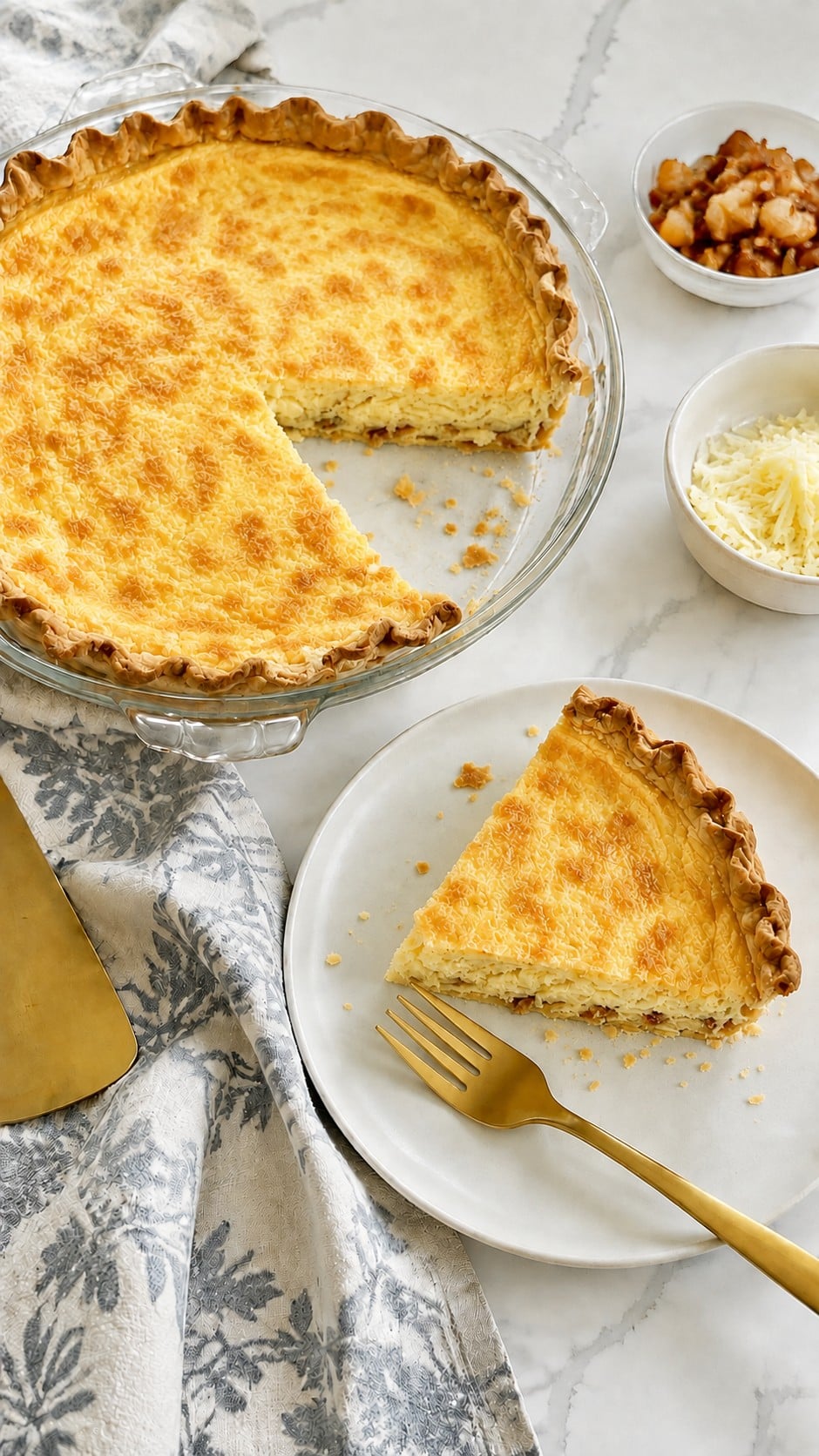
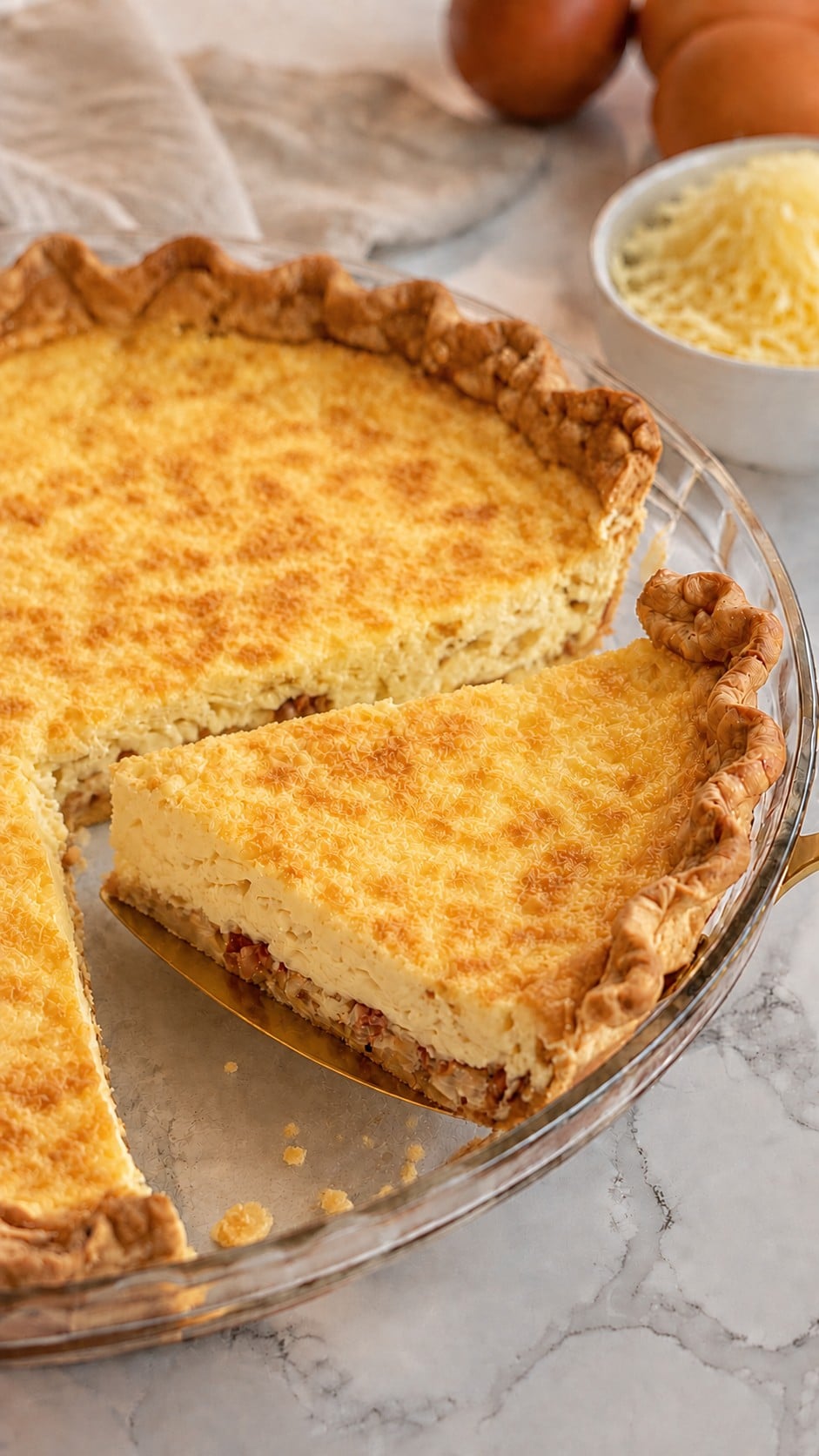
Why You'll Love This Quiche Lorraine
- Balanced filling: Three whole eggs plus three yolks make the custard rich without losing its tender texture.
- Deep savory flavor: Bacon, onion, Gruyère, Parmesan, nutmeg, black pepper, and a small pinch of cayenne build flavor without overwhelming the eggs.
- A crisper crust: The pastry gets a head start in a hot oven before the filling is added.
- Brunch or dinner friendly: Serve it warm with a simple salad, or make it ahead and reheat individual slices.
What Is Quiche Lorraine?
Quiche Lorraine is a savory tart associated with the Lorraine region of France. Versions have evolved over time; this familiar classic combines bacon with a cream-and-egg custard, onion, and Gruyère in pastry. The result should be rich and savory, with a custard that is set but still tender rather than dry.
Ingredients You'll Need
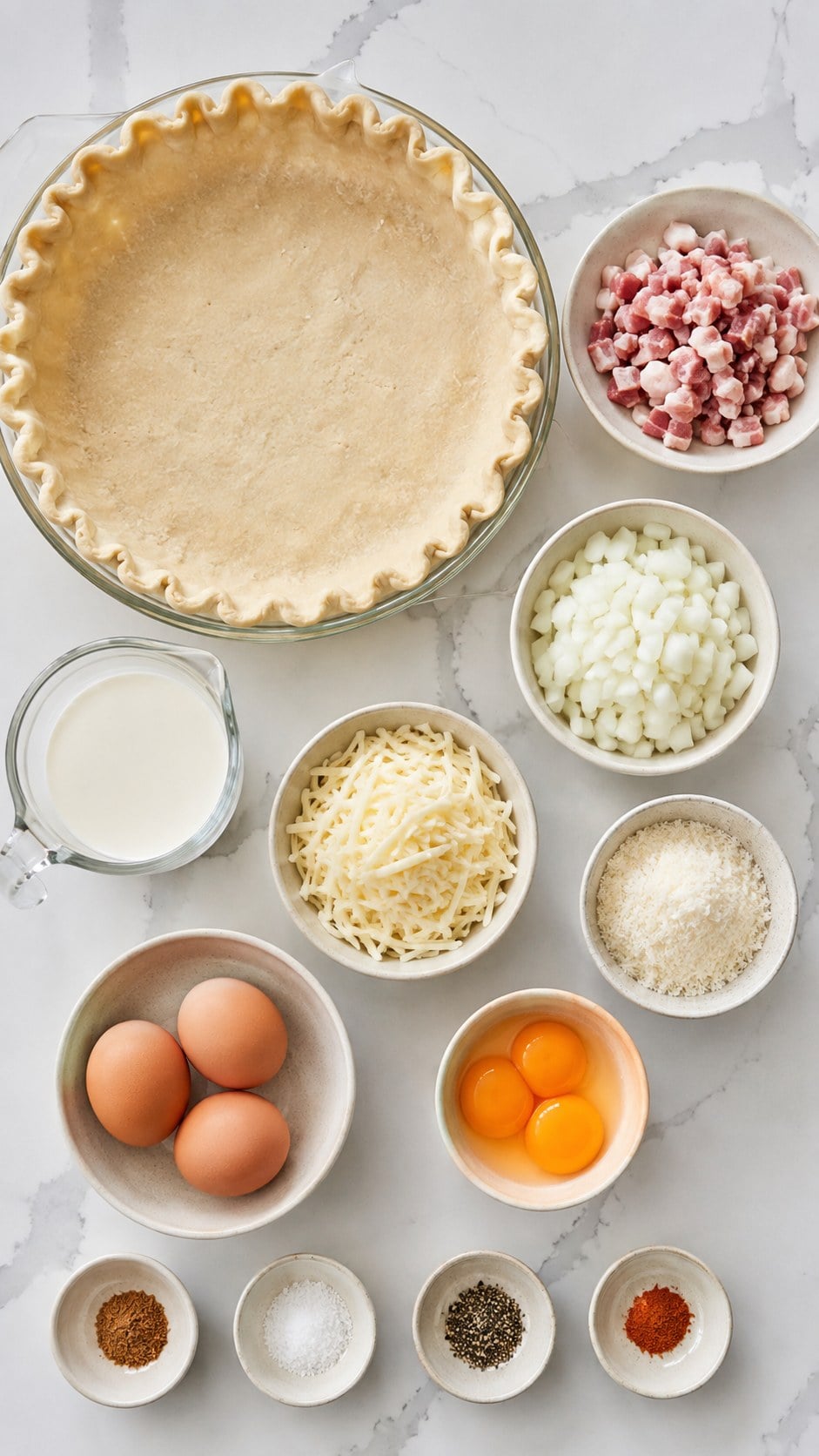
- Pie crust: Use one homemade Butter Pie Crust or a refrigerated store-bought crust in a 9-inch pie plate.
- Bacon: Six diced strips provide savory flavor and enough rendered fat to soften the onion.
- Onion: One diced onion becomes soft and sweet in the skillet.
- Gruyère and Parmesan: Gruyère melts smoothly and tastes nutty; Parmesan adds a salty, savory edge.
- Eggs and yolks: Three large eggs set the filling while three extra yolks add richness.
- Heavy cream: One and one-quarter cups make the custard silky.
- Seasonings: Nutmeg, kosher salt, black pepper, and cayenne round out the filling.
 Buy Now →
  Buy Now →
  Buy Now →
  Buy Now →
  Buy Now →
  Buy Now →
  Buy Now →
  Buy Now →
  Buy Now →
  Buy Now →
  Buy Now →
Tools That Make It Easier
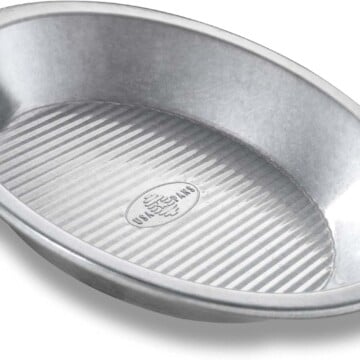
- 9-inch pie plate
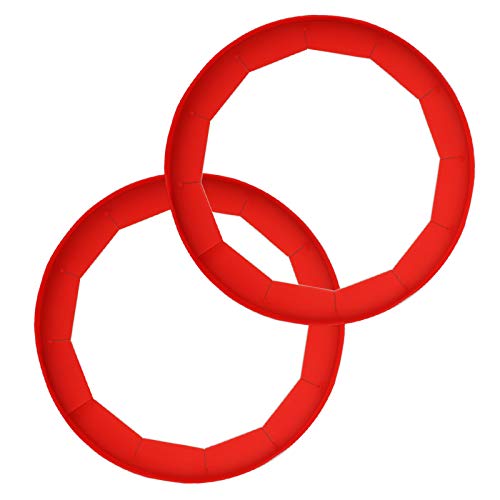
- Pie Crust Shields
- Large sheet of parchment paper
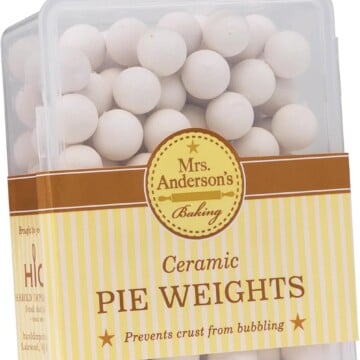
- Pie weights or dried beans
- Rimmed baking sheet
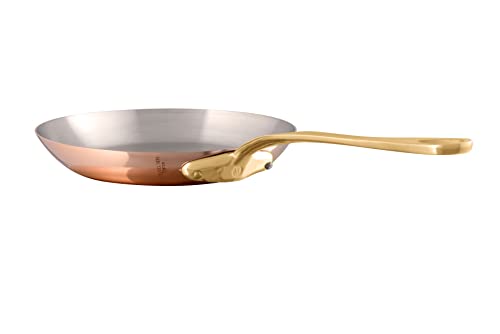
- Large skillet and slotted spoon
- Medium mixing bowl and whisk
 Buy Now →
  Buy Now →
  Buy Now →
  Buy Now →
  Buy Now →
  Buy Now →
 How to Make Classic Quiche Lorraine
1. Blind Bake the Pie Crust
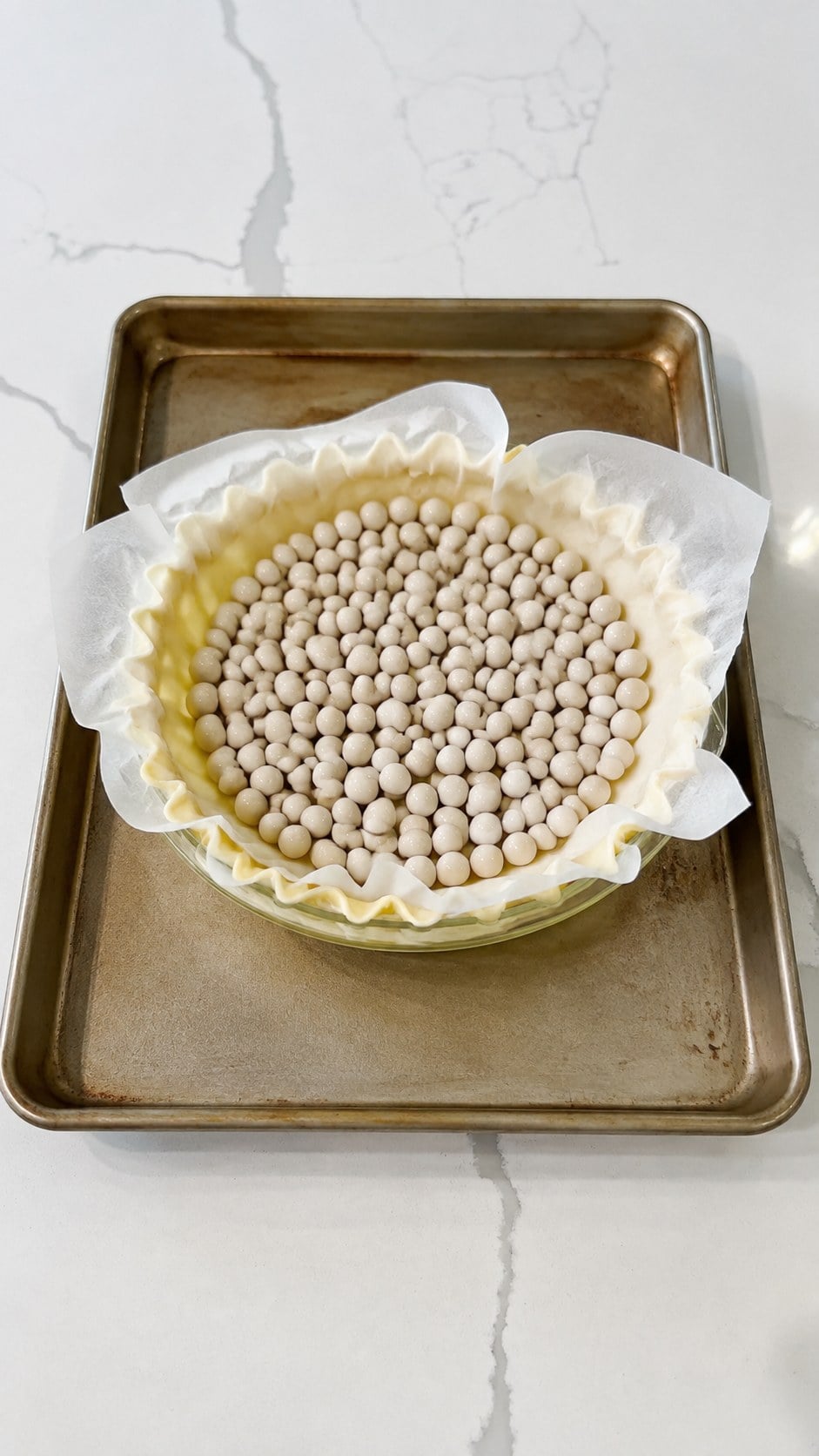
Heat the oven to 400°F. Roll out the dough, press it firmly into a 9-inch pie plate, and crimp the edge. Cover the dough with parchment, add pie weights or dried beans, set the dish on a baking sheet, and bake for 10 to 15 minutes, until the edges are lightly golden. Carefully remove the weights and parchment, then let the crust cool.
2. Cook the Bacon and Onion
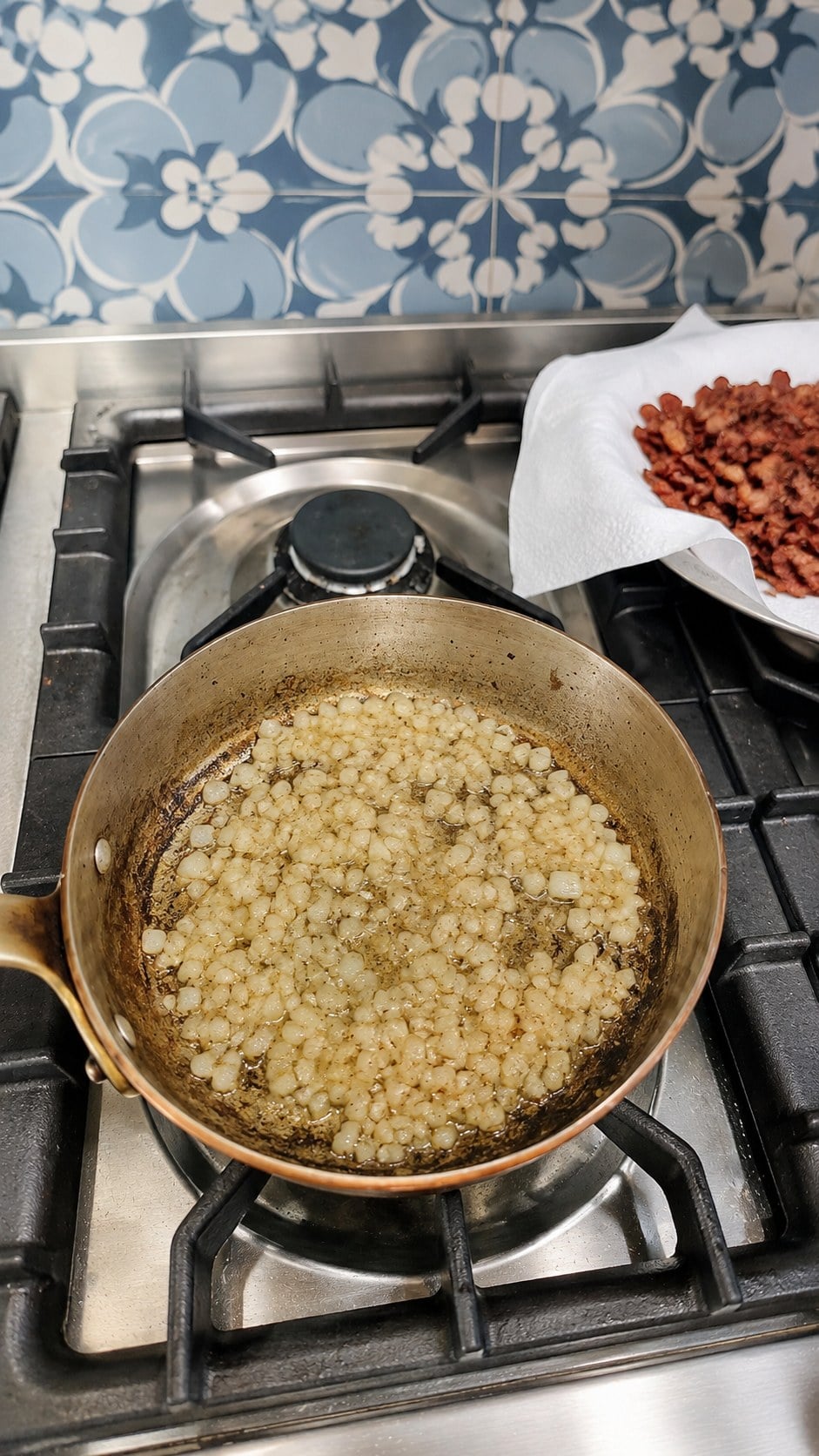
Cook the diced bacon in a large skillet over medium heat until crisp. Move it to a paper towel-lined plate with a slotted spoon. Pour off the excess grease, leaving about 1 tablespoon in the skillet, then sauté the diced onion for about 5 minutes, until soft and translucent.
3. Layer the Filling
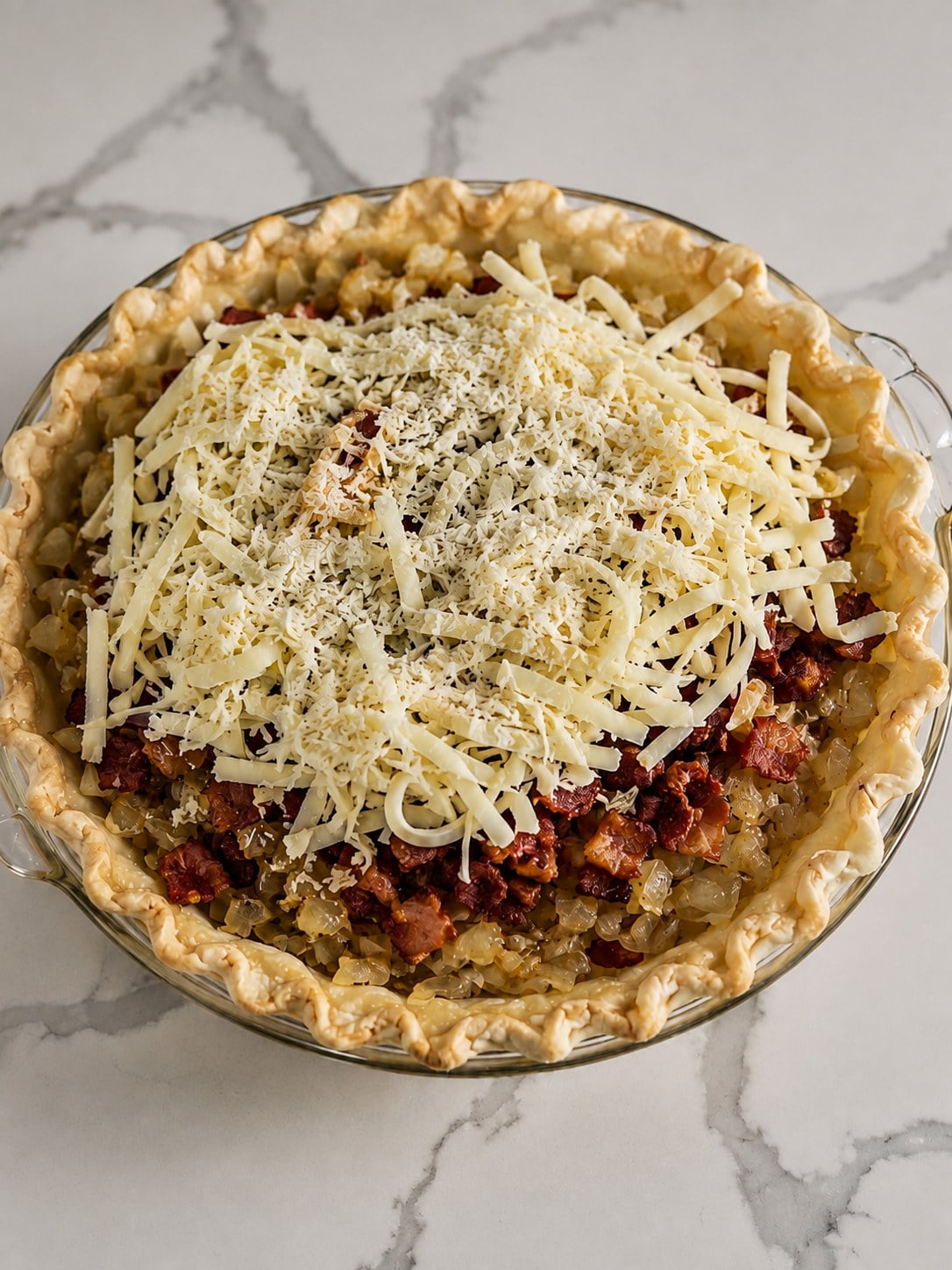
Spread the sautéed onion across the cooled crust. Add the crisp bacon, grated Gruyère, and Parmesan in an even layer so every slice gets a little of each.
4. Whisk and Pour the Custard
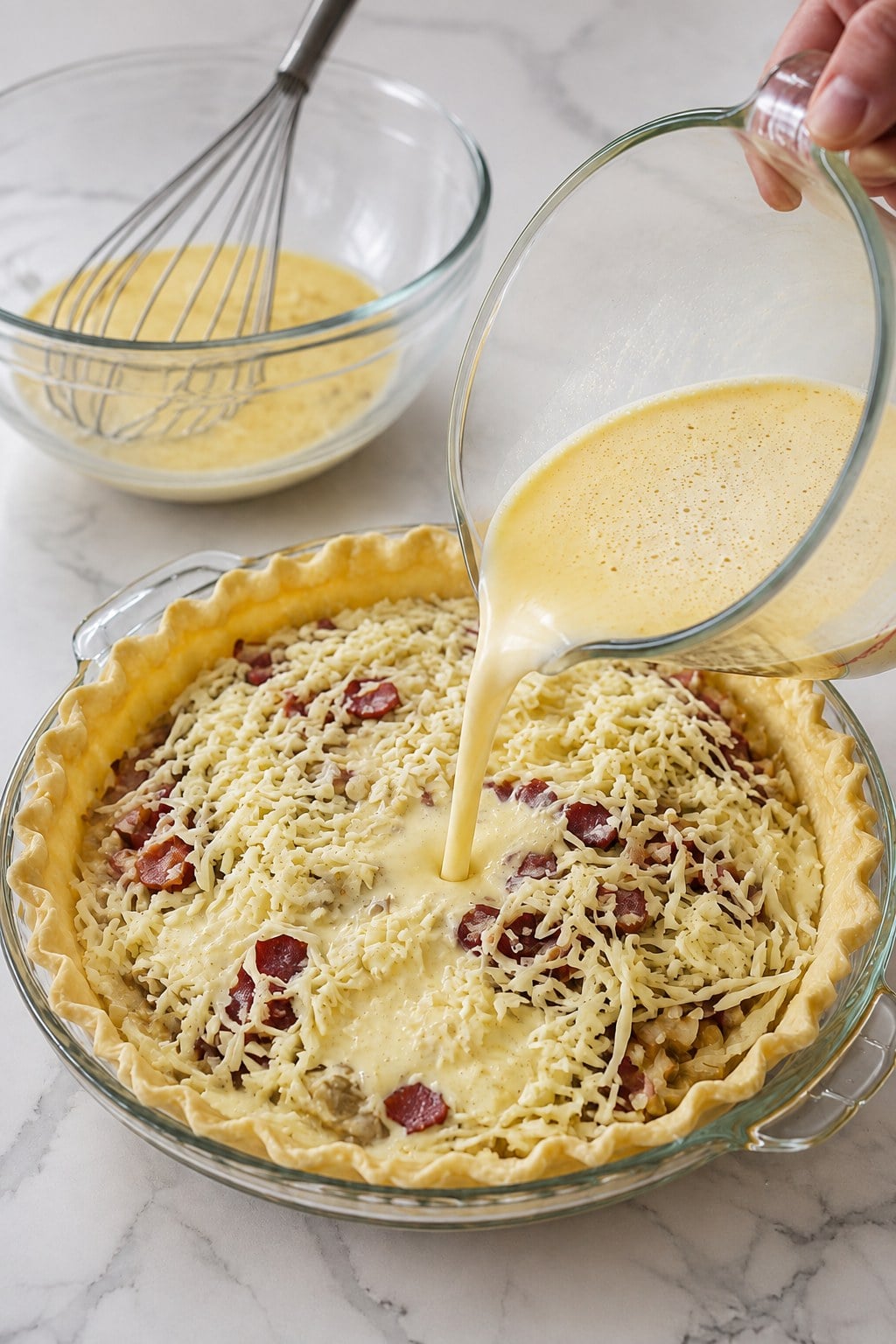
Whisk the eggs, egg yolks, heavy cream, nutmeg, salt, black pepper, and cayenne in a medium bowl until fully combined. Pour the custard slowly over the bacon, onions, and cheese, giving it time to settle around the filling.
5. Bake Until Set
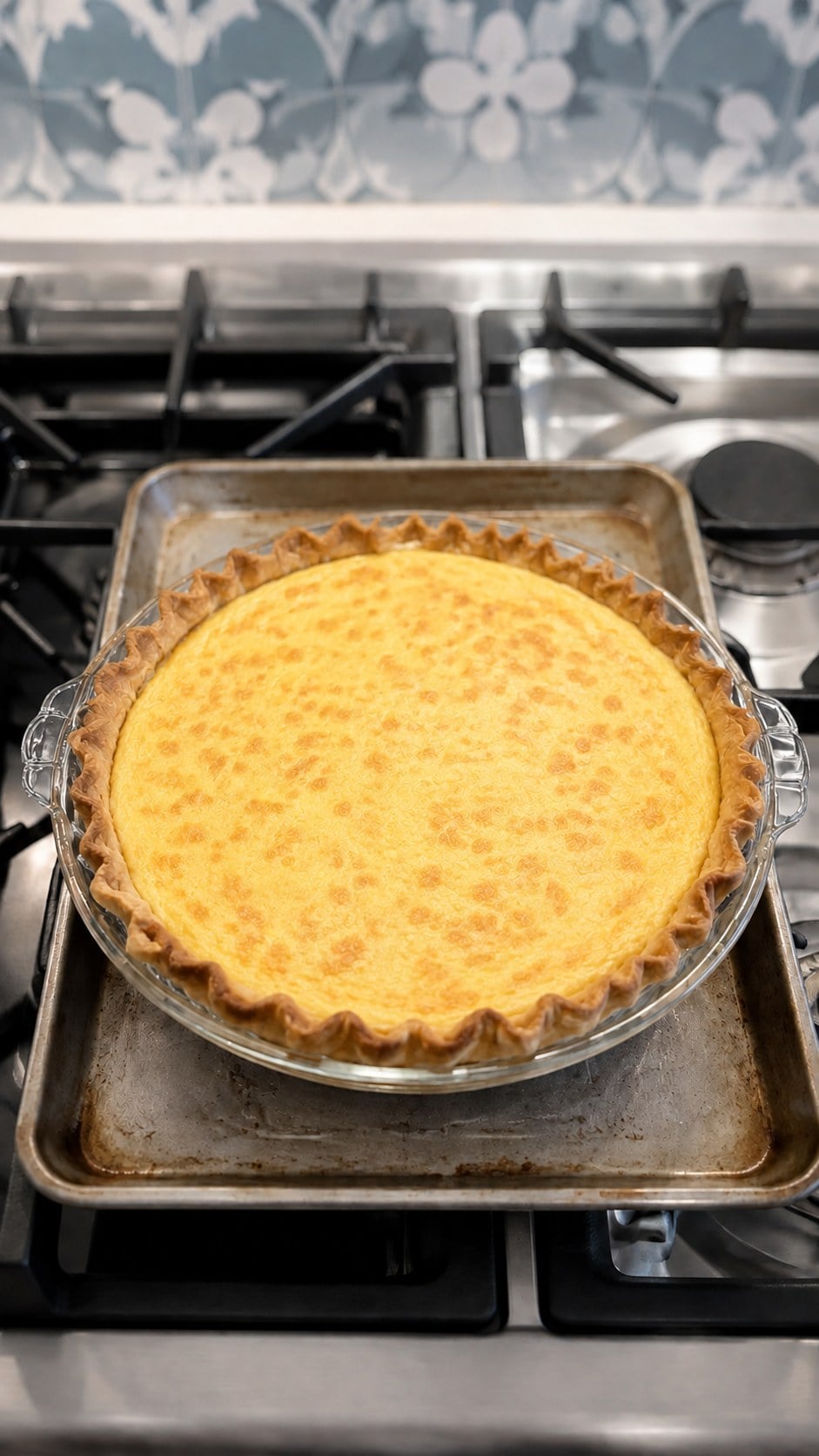
Reduce the oven temperature to 325°F. Keep the pie plate on the baking sheet and bake for 45 to 50 minutes, until the custard is set and the top is lightly golden. Let the quiche rest for a few minutes before slicing, then serve it warm or hot.
Jennifer's Tips for a Flaky Crust and Creamy Center
- Keep the crust on a baking sheet. It makes a full pie plate easier to move and catches any drips.
- Drain the bacon. Crisp bacon adds flavor without leaving the filling greasy.
- Do not rush the onion. Five minutes over medium heat softens its sharp edge and brings out sweetness.
- Lower the oven to 325°F. The gentler second bake lets the custard set without racing past tender.
- Give it a short rest. A few minutes makes cleaner slices while the quiche is still pleasantly warm.
Substitutions and Variations
- Crust: Use a refrigerated pie crust or a gluten-free pie crust that fits a 9-inch pie plate.
- Cheese: Replace Gruyère with Swiss, Emmental, or sharp white cheddar. Asiago or Pecorino Romano can stand in for Parmesan.
- Bacon: Diced ham, pancetta, or turkey bacon will give the filling a different savory character.
- Dairy-free variation: Unsweetened almond or oat milk and a plant-based heavy cream alternative can be used, though the flavor and texture will differ from the cream-based original.
What to Serve with Quiche Lorraine
For lunch or a light supper, keep the plate fresh and crisp with one of these simple sides.
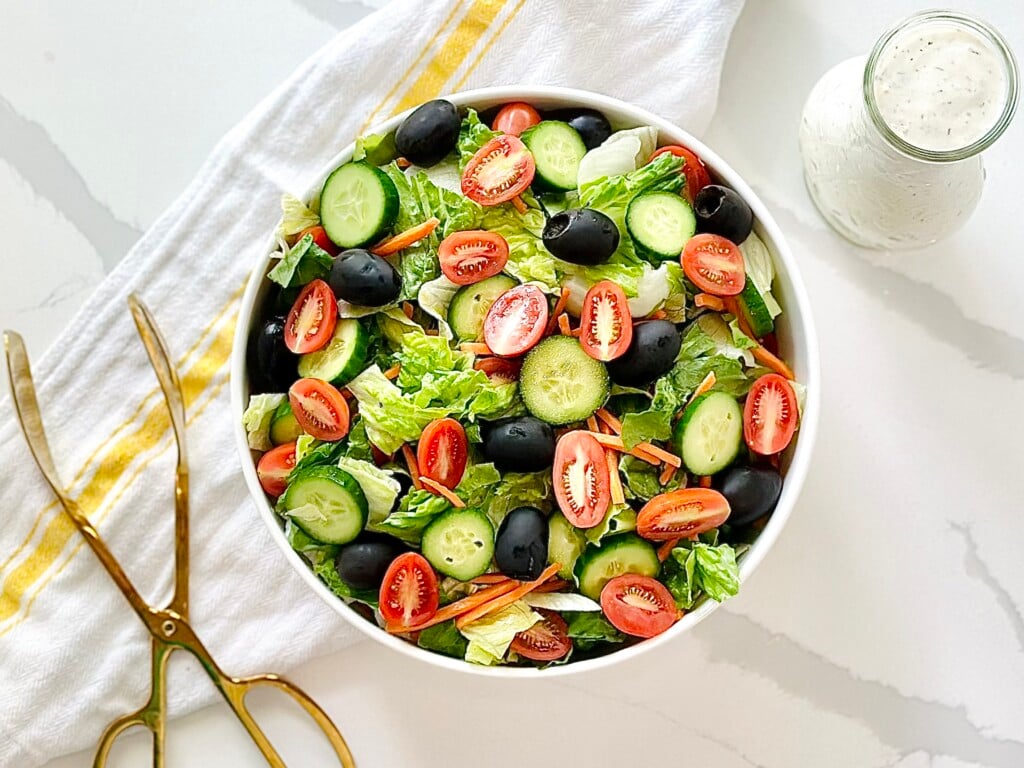
Fresh Garden Salad
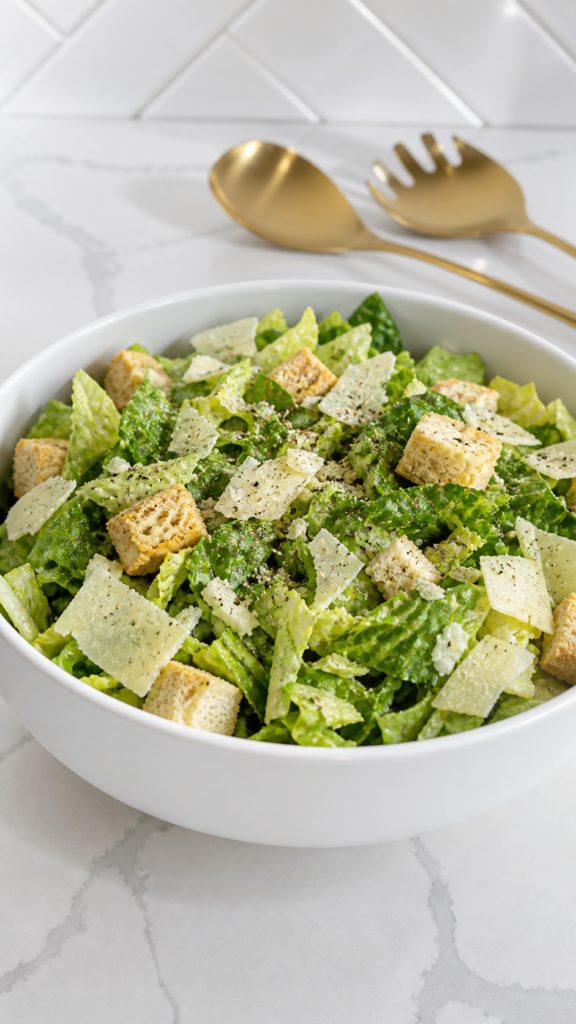
Classic Homemade Caesar Salad
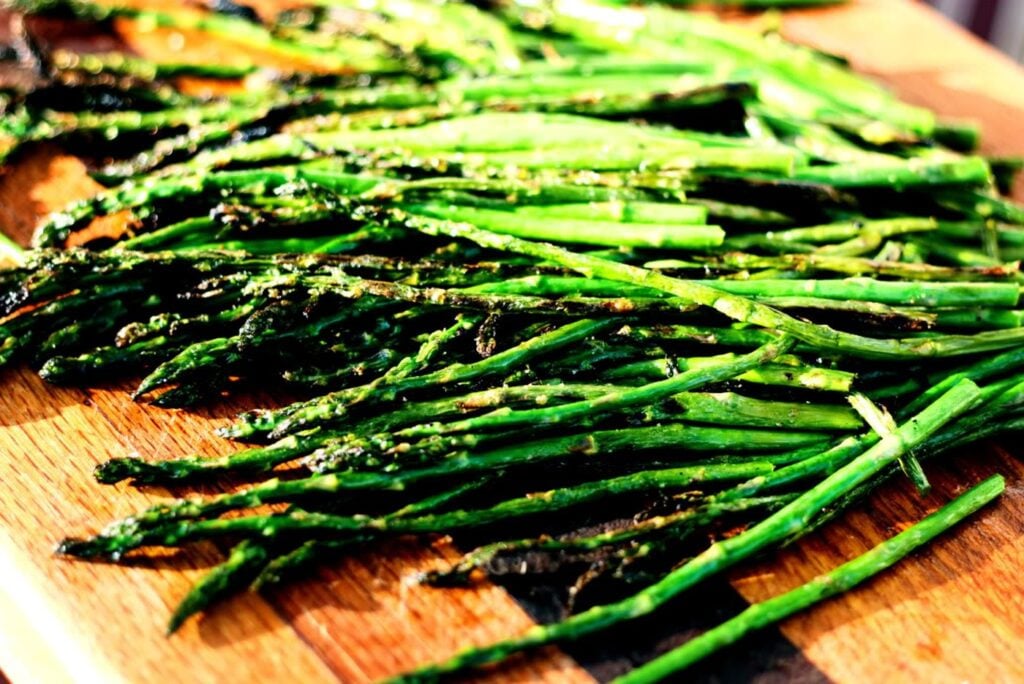
Easy Grilled Asparagus Recipe with Garlic
Make-Ahead, Storage, and Reheating
You can bake the quiche ahead, cool it, cover it, and refrigerate it. Reheat slices until warmed through so the pastry has a chance to crisp again. Keep leftovers refrigerated in a covered container; for the best crust texture, use the oven rather than the microwave.
Frequently Asked Questions
How do you keep Quiche Lorraine from getting a soggy crust?
Blind bake the crust at 400°F for 10 to 15 minutes before adding the filling. Removing the parchment and weights after the edge turns lightly golden gives the pastry structure before the custard goes in.
Can I use a store-bought pie crust?
Yes. Fit one refrigerated crust into a 9-inch pie plate and follow the same blind-baking directions.
What can I substitute for Gruyère?
Swiss cheese, Emmental, or sharp white cheddar work well. Each changes the flavor slightly, but all melt smoothly in the custard.
Can I make Quiche Lorraine ahead?
Yes. Bake and cool it, then cover and refrigerate. Reheat it until warmed through before serving.
Why are there extra egg yolks in the custard?
The three extra yolks add richness and help create a tender, silky center while the three whole eggs provide structure.
Get More Recipes Like This
Sign up for JenniferCooks emails and I'll send tested recipes, practical kitchen tips, and fresh ideas for your next brunch or family meal.
More Recipes You Might Like
If this quiche belongs on your brunch table, here are a few more savory and bakery-style favorites to try next.
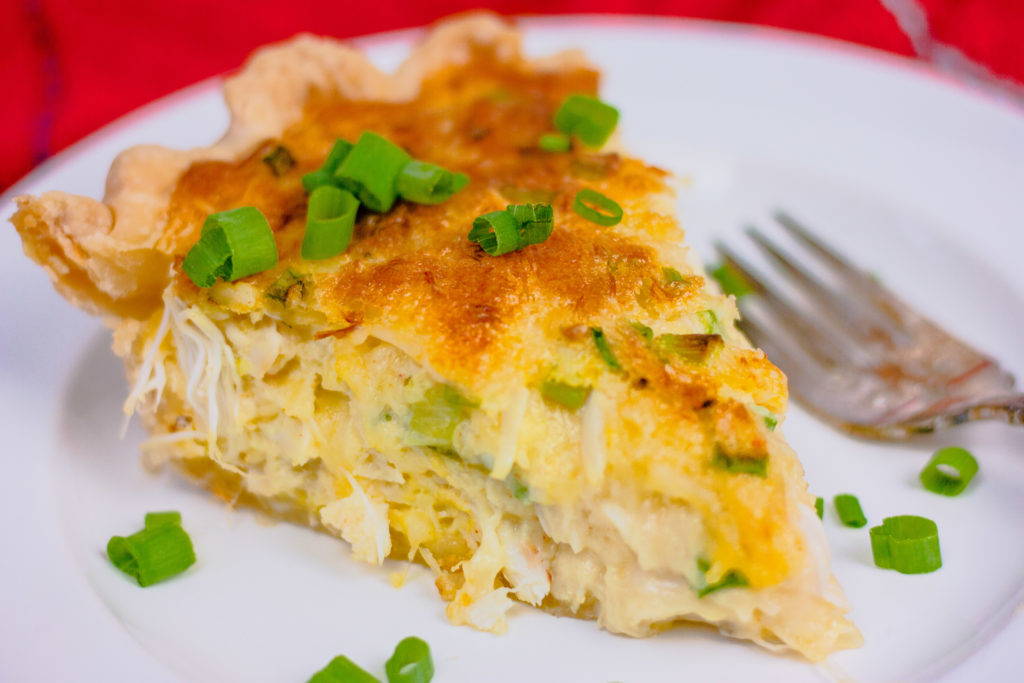
Crab Quiche
Calling all seafood lovers! This Crab Quiche is perfect for brunch, lunch, dinner, or anytime you're craving a savory seafood meal. I made this crab quiche the other day for a quick meal for my husband and I. Our kids were out of town on a youth retreat, so I could get creative! I loved

Authentic Texas Czech Kolaches Recipe
Grandma Zett's Texas Czech kolaches pair soft, pillowy yeast dough with fruit, poppy seed, prune, or cream cheese filling and buttery posypka.

Creme Brulee French Toast
Get ready to turn your breakfast or Christmas morning into something truly unforgettable with this Crème Brûlée French Toast recipe. Imagine the rich, velvety goodness of crème brûlée combined with the light and sweet fluffiness of challah

Blueberry Scones
Scones have become a new love for me, especially as a choice at coffee shops for a breakfast treat. I used to not like them very much because they aren't very sweet...and well, I'm a sweets person. But, to their credit, scones have a delicate sweetness that lets the spices and flavors shine through, and
Quiche Lorraine

Classic Quiche Lorraine pairs a flaky buttery crust with smoky bacon, Gruyère, and silky custard for a dependable brunch that's easy to make ahead.
- Prep Time: 20 minutes
- Cook Time: 1 hour
- Total Time: 1 hour 20 minutes
- Yield: 6 1x
- Category: Breakfast, Brunch
- Cuisine: French
Ingredients
- 1 Butter Pie Crust (or store-bought refrigerated pie crust)
- 6 strips bacon (diced)
- 1 onion (diced)
- 1 ½ cups Gruyere Cheese (grated)
- ¼ cup grated parmesan cheese
- 3 large eggs
- 3 egg yolks
- 1 ¼ cup heavy cream
- ¼ teaspoon ground nutmeg
- ½ teaspoon kosher salt
- ¼ teaspoon freshly ground black pepper
- ⅛ teaspoon cayenne pepper
Instructions
Prepare the Pie Crust
- Preheat the oven to 400°F.
- Prepare pie dough according to instructions.
- Roll out the pie dough and press it firmly into a 9-inch pie plate, crimping the edges as desired.
- Place a large sheet of parchment paper over the dough, ensuring it overhangs the edges.
- Add pie weights or dried beans to prevent the crust from puffing up.
- Set the pie dish on a baking sheet for easy handling.
- Blind bake for 10 to 15 minutes, until the edges are lightly golden.
- Carefully remove the pie weights and parchment paper. Set the crust aside to cool.
Cook the Bacon and Onions
- In a large skillet, cook the diced bacon over medium heat until crispy.
- Use a slotted spoon to transfer the bacon to a paper towel-lined plate.
- Pour off excess grease, leaving about 1 tablespoon in the skillet.
- Add the diced onion and sauté for about 5 minutes, until soft and translucent.
Assemble the Quiche
- Sprinkle the cooked bacon, sautéed onions, and both cheeses evenly over the cooled pie crust.
Make the Egg Custard
- In a medium bowl, whisk together the eggs, egg yolks, heavy cream, nutmeg, salt, black pepper, and cayenne pepper until well combined.
- Slowly pour the egg mixture over the bacon, onions, and cheese in the pie crust.
Bake the Quiche
- Reduce the oven temperature to 325°F.
- Place the quiche (still on the baking sheet) into the oven.
- Bake for 45 to 50 minutes, until the custard is set and lightly golden on top. If the crust is getting too brown, cover it with foil or with a pie shield.
- Let the quiche cool for a few minutes before serving. Enjoy warm or hot!

Notes
Substitutions & Variations
- Crust Substitute: Use a store-bought refrigerated pie crust or a gluten-free pie crust if needed.
- Cheese Substitute: Swap Gruyère with Swiss cheese, Emmental, or sharp white cheddar. Parmesan can be replaced with Asiago or Pecorino Romano.
- Dairy-Free Option: Use unsweetened almond milk or oat milk and a plant-based heavy cream alternative.
- Bacon Alternative: Try diced ham, pancetta, or turkey bacon for a different flavor.
Nutrition
- Calories: 586
- Sugar: 2
- Sodium: 632
- Fat: 48
- Saturated Fat: 24
- Carbohydrates: 19
- Fiber: 1
- Protein: 19
- Cholesterol: 289





Hubert COURTAIS says
Bonjour Jennifer,
Thank you for your recipe for its classic and traditional respect.
It is almost as good as my great grand mother' recipe. She was from Lorraine.
Hubert C. Rennes, France
Jennifer says
Thank you so much, Hubert! That truly made my day. Knowing this recipe reminds you of your great-grandmother's Quiche Lorraine, especially with your family's roots in Lorraine, is about the nicest compliment I could receive. Thanks for taking the time to leave such a kind comment. Merci, and greetings all the way to Rennes!