
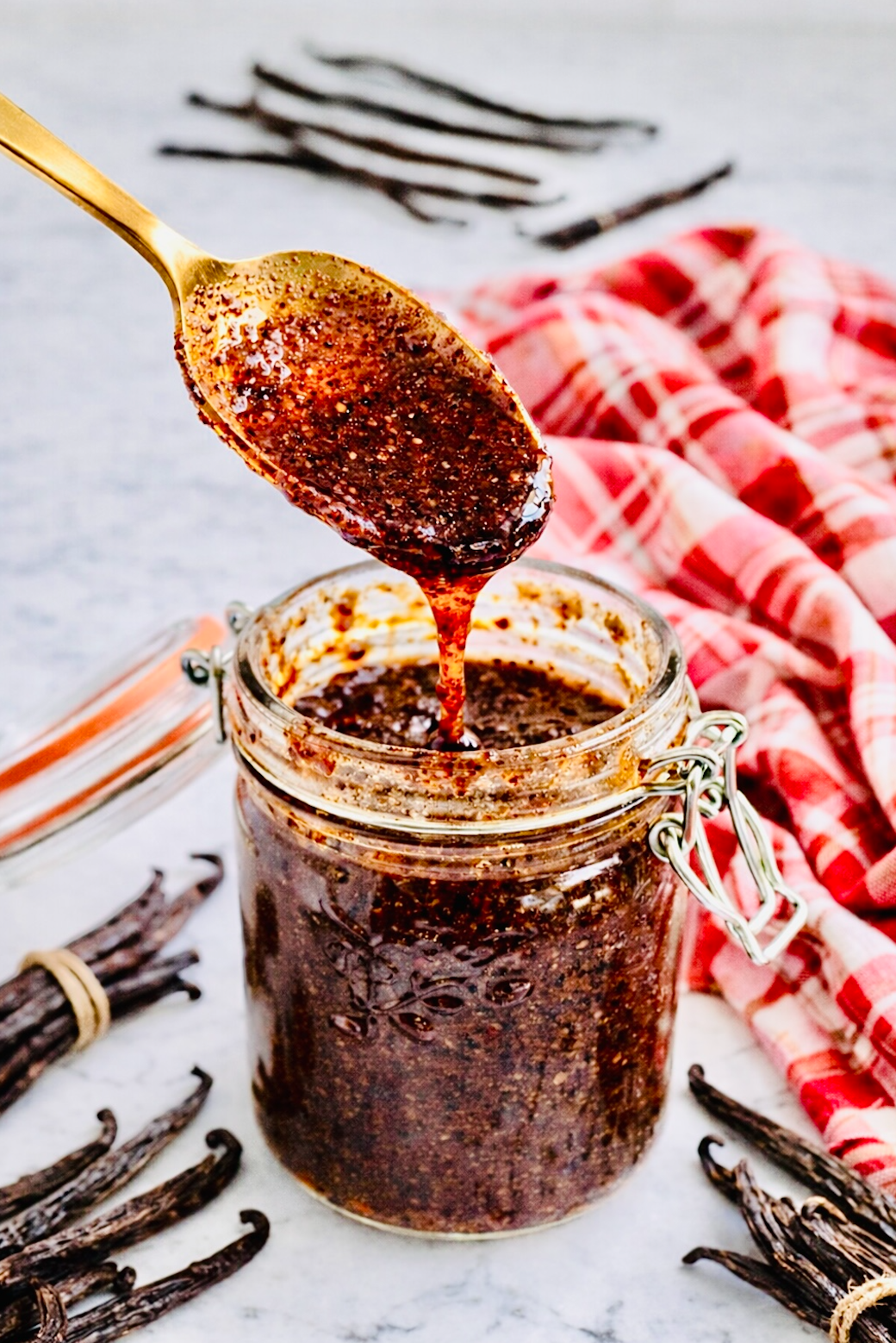
There's a certain moment when you stir batter and catch that deep, floral scent rising up from the bowl. Not just sweet - but warm and almost smoky. That's when I know I used vanilla bean paste instead of plain extract.
I still make homemade vanilla extract and keep a dozen or so jars tucked away in my pantry like I always have. But over the last five years or so, I've reached for vanilla bean paste more often. The flavor is stronger. The flecks of real vanilla seeds - that little bit of vanilla caviar - show up in the finished dessert. And I like that. If I'm baking something meant to taste like vanilla - truly vanilla - I don't want subtle.
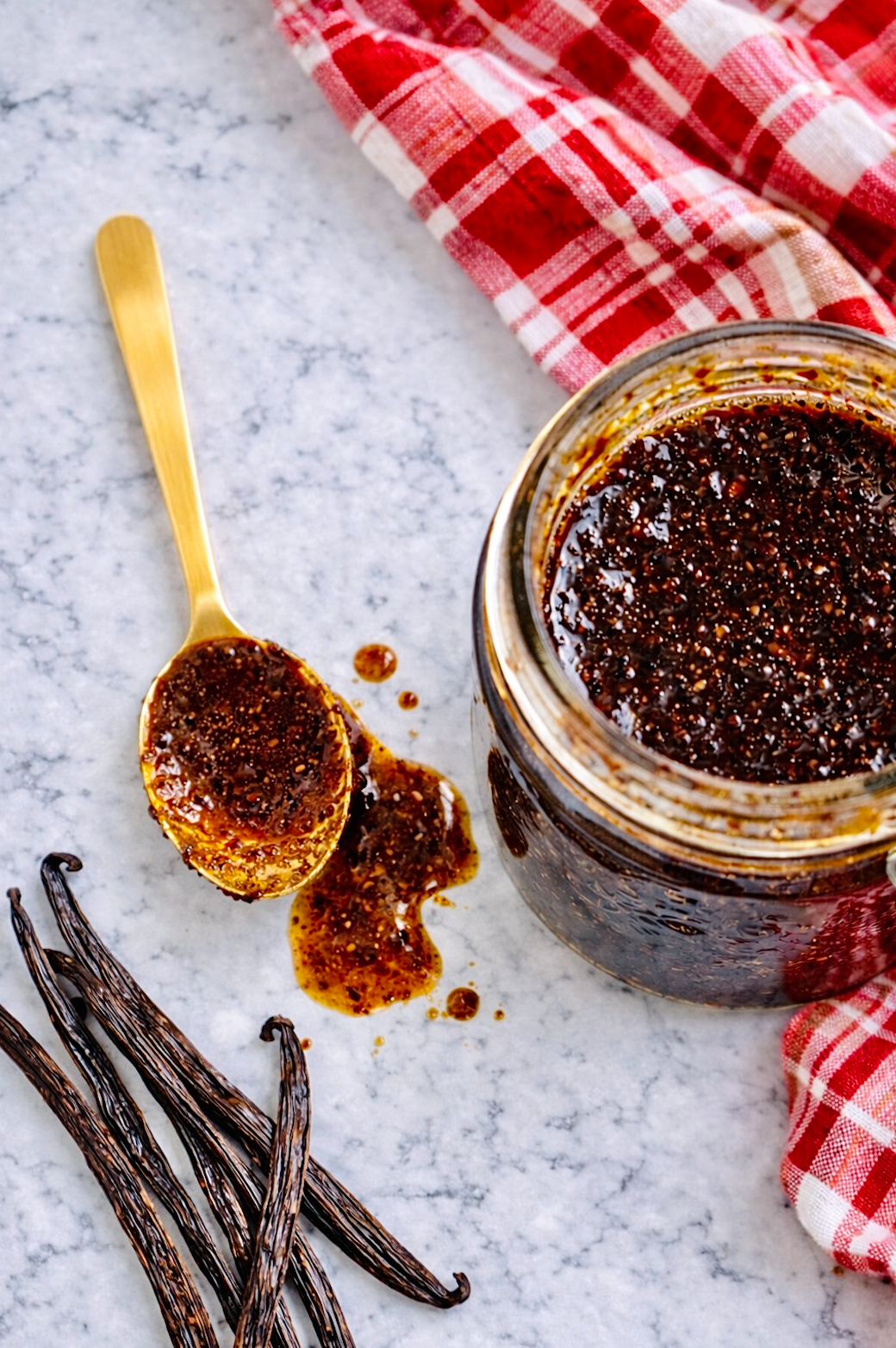
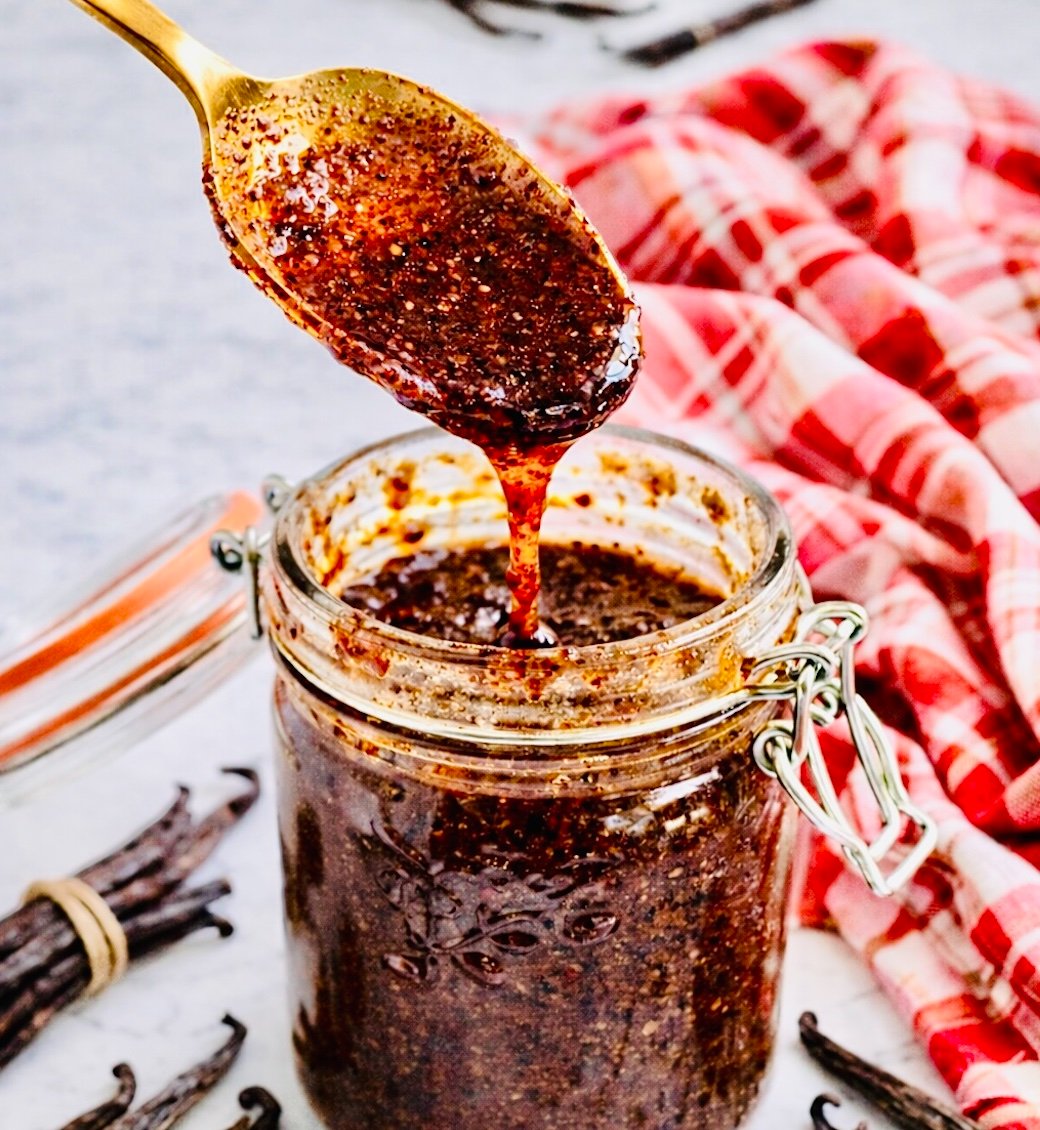
This vanilla bean paste recipe is what I make regularly for myself and for gifts. I prefer using whole vanilla beans - usually Grade B Madagascar vanilla bean pods for their rich flavor of real vanilla beans. I chop the whole bean, seeds and all, because that's where the powerful natural flavor lives. The texture should look like coarse black pepper suspended in syrup. If it looks muddy, it's over-blended.
It takes about 15 minutes to prep and only a few minutes to blend. Then it rests. A month, if you can stand it. That month mark makes all the difference in the flavor.
If you've ever hesitated at the price of store-bought vanilla bean paste, this is your sign. Let's make your own homemade vanilla bean paste and keep a glass jar of it ready.
This post may contain affiliate links. I may receive commissions for purchases made through links in this post.
The Roots of This Recipe
Vanilla bean paste is a concentrated vanilla product developed as a hybrid between extract and whole vanilla beans.
Commercial vanilla extract production expanded in the late 19th century after new alcohol extraction methods made it widely accessible in Europe and the United States. By the mid-20th century, brands were experimenting with thicker vanilla products that suspended real vanilla seeds in syrup for visual appeal and stronger flavor.
Madagascar became the dominant source of high-quality beans in the 20th century, especially Bourbon vanilla from the Sava region. The demand for visible vanilla flecks in desserts like crème brûlée and premium ice creams led to the development of paste-style products.
Unlike pure vanilla extract, which is legally defined by alcohol content and bean ratio in the U.S., vanilla bean paste does not have a strict federal standard. As a result, recipes vary in sweeteners, thickening agents like xanthan gum, and alcohol base.
The Gist
Cook time: 3 minutes blend time | Total time: 15 minutes plus resting
Yield: About 2½ cups
Skill level: Easy
Best for: Baking, custards, gifting
Make-ahead friendly: Yes
Dietary notes: Gluten-free; alcohol option can be replaced
What you'll learn: How to balance sweetness, texture, and alcohol to create a more intense vanilla flavor than extract alone
You Might Also Like
Why You'll Love It
Strong vanilla flavor without needing a whole vanilla bean pod each time
• Real vanilla seeds visible in cakes, custards, and frostings
• Keeps for a long time in a cool, dark place
• Makes a great gift in a small jar of vanilla paste with a tight-fitting lid
Kitchen Equipment
 Buy Now →
  Buy Now →
  Buy Now →
  Buy Now →
  Buy Now →
Shop my kitchen favorites
Visit my Amazon Store for the tools and staples I use most often.
Ingredients You'll Need
 Buy Now →
  Buy Now →
  Buy Now →
  Buy Now →
 Ingredient Notes
• Whole vanilla beans: Use high-quality beans. Madagascar vanilla bean pods offer dependable, rich flavor.
• Vodka: Neutral and clean. One of the top types of liquor for extracts because it lets the vanilla shine.
• Light corn syrup: Helps suspend the vanilla caviar evenly.
• Xanthan gum: Stabilizes the paste so the resulting vanilla bean paste doesn't separate.
• Sugar: Adds body and preserves the mixture.
Substitutions
• Vodka can be replaced with vegetable glycerin for an alcohol-free version; flavor extraction may be slightly milder.
• Honey or agave may replace light corn syrup, though sweetness will shift.
• Superfine sugar dissolves more quickly than standard granulated sugar.
• Grade B beans are economical and excellent for paste or homemade vanilla extract.
How to make
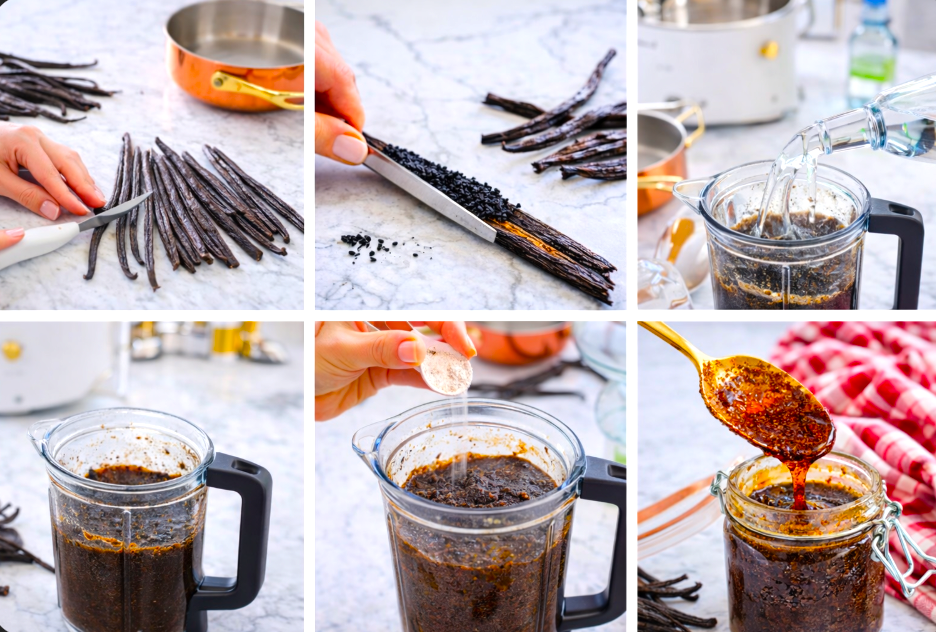
Chop the whole vanilla bean pods into small pieces, including the seeds. Add them to a high-powered blender with water, sugar, vodka, and light corn syrup. Blend until the mixture looks speckled and the pieces are about the size of coarse black pepper.
With the blender running on medium, sprinkle in xanthan gum. Within seconds, the mixture thickens slightly. It will continue to develop as it cools to room temperature and rests.
Timing & planning notes
You can use it immediately, and it will taste good. But if you let it sit in a dark place for a month, the flavor deepens noticeably.
Store in a clean airtight container or glass jar at room temperature in a dark pantry. Shake or stir occasionally during the first week if separation occurs.
Let's Make It
Prepare the Beans
Rinse if needed, pat dry, and trim the ends. Chop the whole bean into small pieces.
Blend the Base
Add beans, water, sugar, vodka, and light corn syrup to a high-powered blender. Blend on high for about 2 minutes.
Check the Texture
The pieces should resemble coarse black pepper. If larger, pulse briefly.
Thicken
Reduce speed to medium and slowly add xanthan gum. Blend 30 seconds until slightly thickened.
Cool and Store
Let cool to room temperature, then transfer to a clean airtight container with a tight-fitting lid. Store in a dark place.
Chef's tips for vanilla bean paste
• Chop before blending: Smaller pieces protect your blender and improve texture.
• Watch the flecks: You want visible real vanilla seeds, not puree.
• Let it rest: The month mark delivers a more intense vanilla flavor.
• Store smart: Keep in a dark pantry to preserve color and aroma.
• Measure properly: Substitute one teaspoon of vanilla paste in place of vanilla extract in most recipes.
Troubleshooting
• Too thin - Not enough xanthan gum; blend briefly with a pinch more.
• Separation - Natural settling; stir and ensure proper storage in a dark place.
• Bitter taste - Beans may be low quality; use high-quality beans from reputable suppliers like Vanilla Bean Kings.
Make ahead & freezing
This paste keeps up to three years at room temperature if stored in a cool, dark location. In very warm climates, refrigeration extends freshness.
You can freeze small portions for up to two years. Thaw in the refrigerator and stir well before using.
FAQs
Can I use a food processor instead of a blender?
Yes, but the texture may be slightly coarser.
Is this the same as homemade vanilla extract?
No. Paste contains sugar and thickener, creating a syrupy texture with visible seeds.
What kind of vanilla beans are best?
Madagascar vanilla bean pods are the most versatile, though any high-quality beans work.
Can I replace store-bought vanilla bean paste with this?
Absolutely. Use it teaspoon for teaspoon in place of vanilla extract or paste.
Leftovers & storage
Store in a clean airtight container with a tight-fitting lid at room temperature in a dark pantry. Properly stored, it lasts up to three years.
If refrigerated, allow it to return to room temperature before using for best consistency.
Stick around for seconds!
There's something satisfying about opening a jar of your own homemade vanilla paste. If you enjoy stocking your pantry with the good stuff, there's more waiting for you.
Tried it?
If you make it, I'd love to hear how you used it - vanilla cake, crème brûlée, or just stirred into coffee.
Vanilla Bean Paste
Ingredients
- 2 ounces Vanilla Beans about 24 whole vanilla beans
- 3 ounces water ¼ cup plus 2 tablespoons water (3 ounces)
- 1 cup granulated sugar
- ¾ cup vodka
- 2 tablespoons light corn syrup
- ¼ teaspoon xanthan gum

Instructions
Prepare the Vanilla Beans
- Coarsely chop the beans into small pieces using a sharp knife2 ounces Vanilla Beans
Blend the Base Mixture
- Place the chopped vanilla beans into a high-powered blender
- Secure the lid tightly
- Blend on high speed for about 2 minutes
- Check the Texture
- Stop the blender and inspect the mixture
- Vanilla bean pieces should be about the size of coarse black pepper
- If pieces are larger, blend again in short bursts until the proper texture is reached
Thicken the Paste
- Reduce blender speed to medium
- Slowly sprinkle in the xanthan gum while blending¼ teaspoon xanthan gum
- Continue blending for about 30 seconds until fully incorporated
- The mixture will thicken further as it cools and rests
Cool and Store
- Allow the paste to cool completely at room temperature
- Transfer to clean, airtight containers
- Store in a cool, dark place at room temperature
Notes
*Nutrition information is automatically calculated based on ingredient data and should be considered an estimate. When multiple ingredient options are provided, the first listed is used for calculation. Optional ingredients and garnishes are not included in the nutrition analysis.


Robin DeBold says
Can spiced rum be used instead of Vodka? Will this increase the resting time? I use spiced rum to make vanilla extract and that process is longer than using Vodka
Jennifer says
Hi Robin,
You can use spiced rum, but it will change the flavor. Those warm spice notes (cinnamon, clove, caramel) will show up alongside the vanilla, so it won’t taste as clean as when you use vodka.
It won’t need a longer resting time, though. Since the beans are chopped and blended, extraction happens much faster than traditional extract. The one-month rest is still ideal, but rum won’t extend it.
If you like a little holiday warmth in the background, it could be a fun twist.
Barbara Hammond says
Can I use beans from extract? I have a lot of beans left form extract I sure hate to throw out.
Jennifer says
Hi Barbara,
You can reuse them, but they’ll need a little help. Once beans have been used for extract, a lot of the vanilla oils have already been pulled out, so the flavor is milder.
A good rule of thumb is about 2 parts used beans to 1 part fresh beans. The fresh beans bring the strong vanilla flavor back, and the used ones still add a little depth and those pretty flecks.
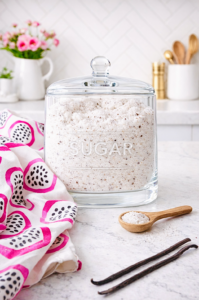
And if you still end up with extras, don’t toss them. I like to rinse them, let them dry, and bury them in a jar of sugar. Give it a week or two and you’ve got lovely vanilla sugar for coffee, fruit, or baking. It’s one of those quiet little kitchen habits that pays off later.