
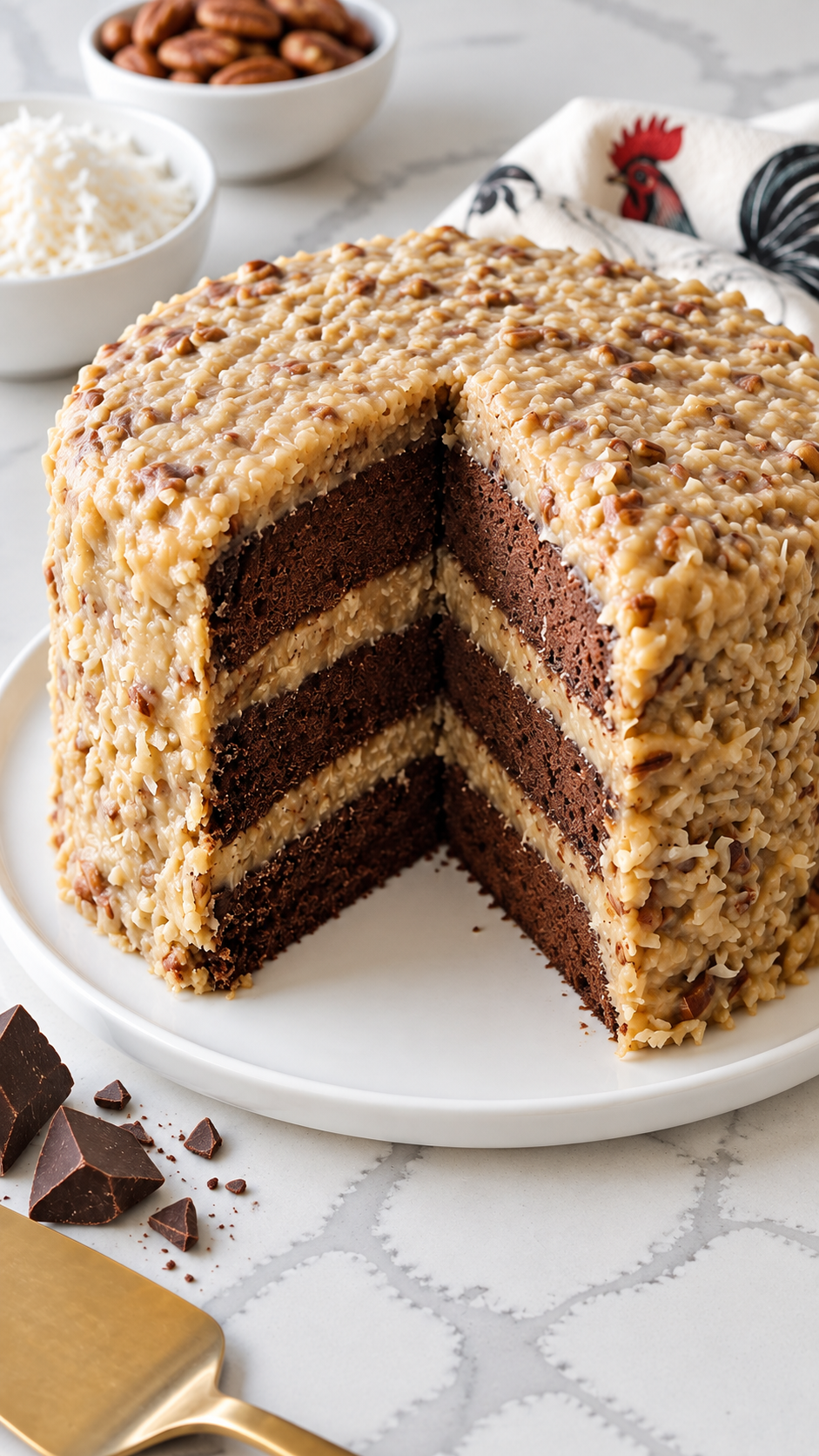
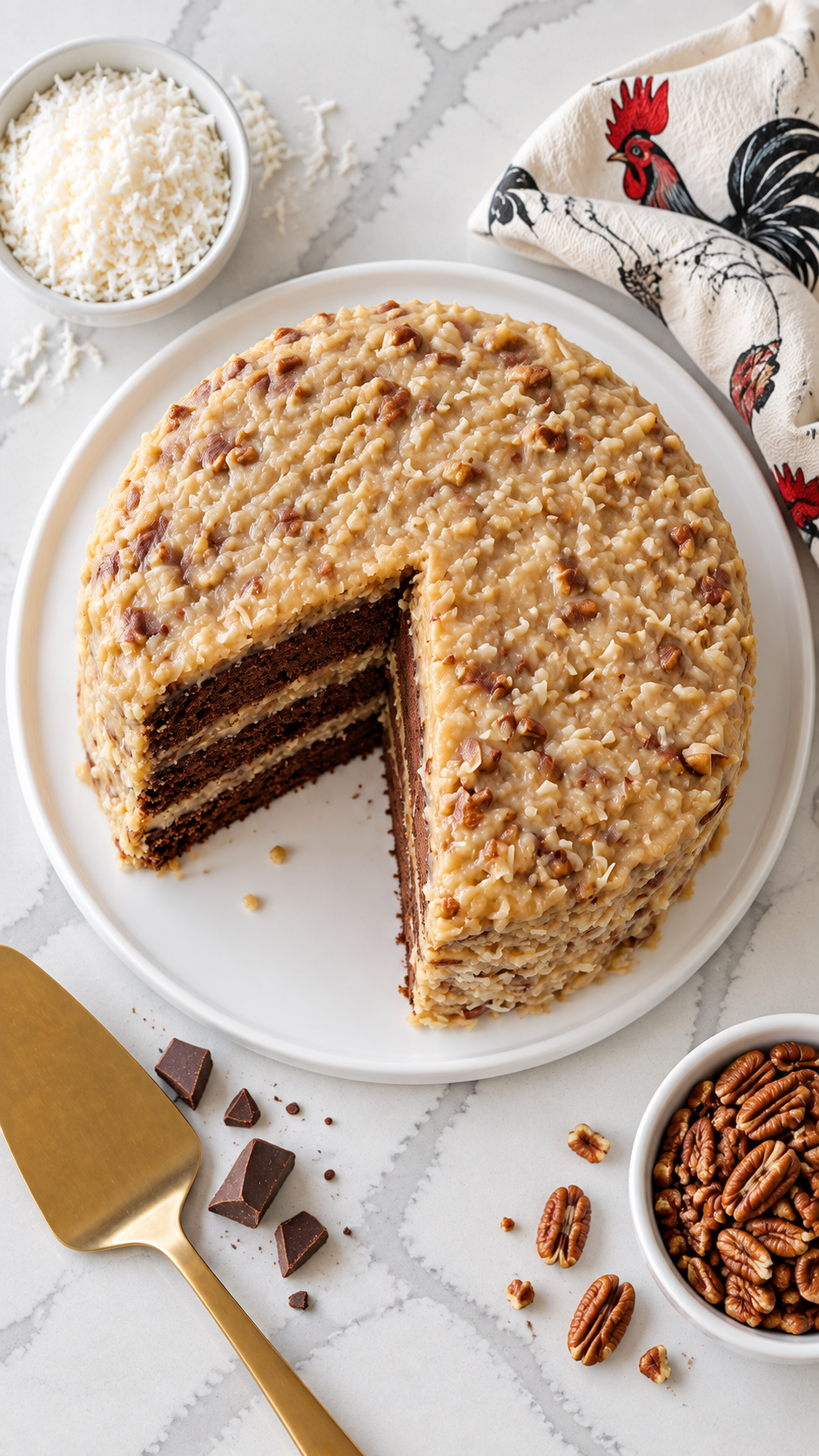
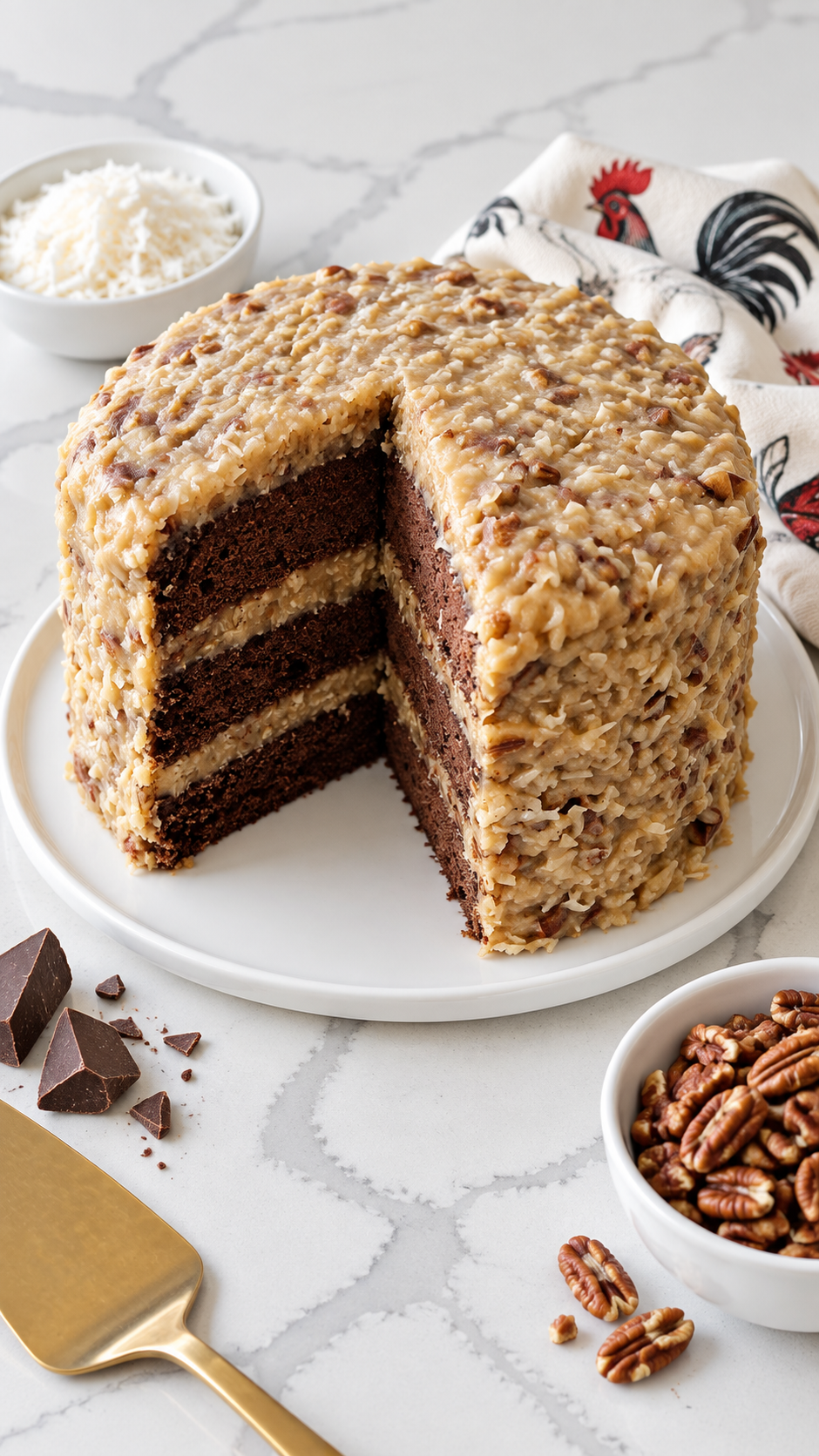
This German chocolate cake from scratch has three tender chocolate layers and a generous coconut-pecan frosting spread between the layers and over the top and sides. Sweet baking chocolate, buttermilk, and vanilla bean paste give the cake its flavor; the cooked frosting brings the coconut and pecans into every bite. It serves 16 and makes a lovely homemade birthday cake.
Before you begin: Have three 9-inch round cake pans ready and heat the oven to 350°F. The cake takes 15 minutes to prep and 20-30 minutes to bake. Allow additional time for frosting, complete cooling, and assembly; this is not a 45-minute ready-to-serve cake. For a single-pan chocolate dessert, try my Texas Sheet Cake.
There's just something about German Chocolate Cake that tugs at my heartstrings. Maybe it's the way the chocolate layers are just the right kind of tender, or how that coconut-pecan frosting is so rich and caramel-y you could eat it straight off the spoon (and believe me, I have). But really, it's not just about the flavor-it's about the memories baked into every bite, the kind that feel like home no matter how many years pass.
Growing up, birthdays weren't just a day on the calendar. They were full-blown, cake-centered, all-day affairs. And for me, that meant German Chocolate Cake, made from scratch by my mom.
I can still see her in the kitchen, measuring out flour with the kind of precision only a mother possesses, melting that sweet chocolate, and stirring the frosting until it reached just the right consistency-thick, glossy, and studded with pecans. I'd linger nearby, waiting for my chance to swipe a taste when she wasn't looking.
The smell of chocolate and vanilla filled the house, wrapping around me like a warm hug. That first bite was always the best-soft, buttery cake with that sticky-sweet frosting melting on my tongue. It was the taste of birthdays, the taste of love.

But there's one birthday that stands out among the rest, the kind of memory that settles deep in your bones and stays there. I must've been in my mid teens when my grandparents, who lived up in Austin, decided to make the drive down to Southeast Houston just to celebrate with us.
Now, let me tell you, that was no small thing. My grandparents weren't the type to travel often. They came from a time when the kids and grandkids were expected to do the visiting, not the other way around. But that year, they made an exception.
And they didn't come empty-handed. My grandma-who, bless her heart, could turn a sack of flour and a little sugar into something downright magical-walked through our front door carrying a cake tin like it was a treasure chest. And in a way, it was.
Inside was the most beautiful German Chocolate Cake I'd ever seen. The frosting glistened under the light, thick and spread all the way to the edges, cascading down the sides like it had nowhere better to be. She had made it just for me. Not just any cake, but my cake. And suddenly, I wasn't just another year older-I was loved in a way that only a homemade cake, delivered across Texas, could say.
That weekend, we sat around the table, swapping stories between bites of cake, my grandpa cracking jokes and teasing me about having seconds (which, of course, I did). It was loud, messy, and perfect.
Looking back, I realize now how special that visit was. They were in their seventies, and while I didn't think much of it at the time, I now understand how rare it was for them to make that trip. That cake wasn't just dessert. It was their way of showing up, of saying, we love you enough to break tradition, enough to spend hours in the kitchen, enough to make sure you know you're worth the trip.
Every time I bake this cake now, I feel my mom in the careful measuring, my grandma in the frosting, my grandpa in the laughter that still lingers in my mind. It's more than just a recipe-it's a legacy, passed down in layers of chocolate and pecans. And that's the thing about food, isn't it? It ties us to the people we love, even long after they're gone.
Let the cake layers cool completely and the frosting become spreadable before you put them together. That patience is what keeps those generous layers from sliding around.
Tools That Make It Easier
Three matching 9-inch pans help the layers bake evenly. Gather the following before you start:
- Three 9-inch round cake pans
- Parchment paper
- Large microwave-safe bowl
- Medium and large mixing bowls
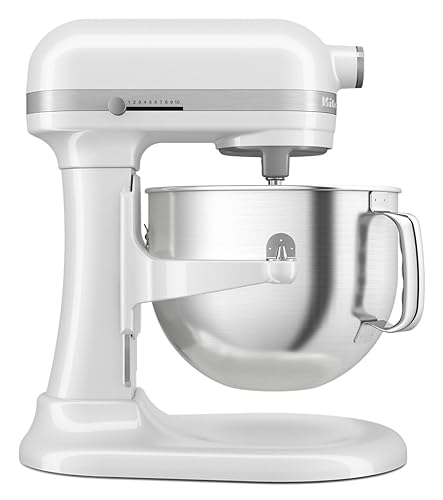
- Electric mixer
- Measuring cups and spoons
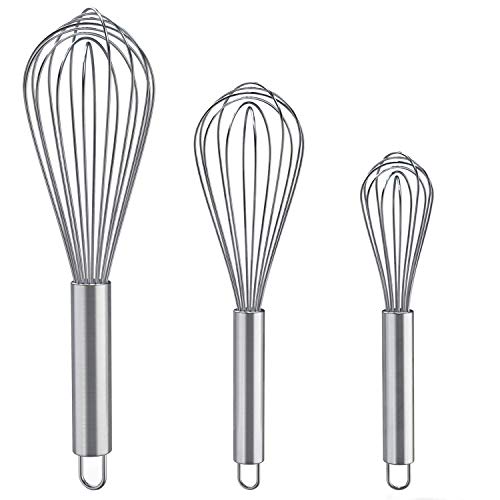
- Whisk
- Large saucepan
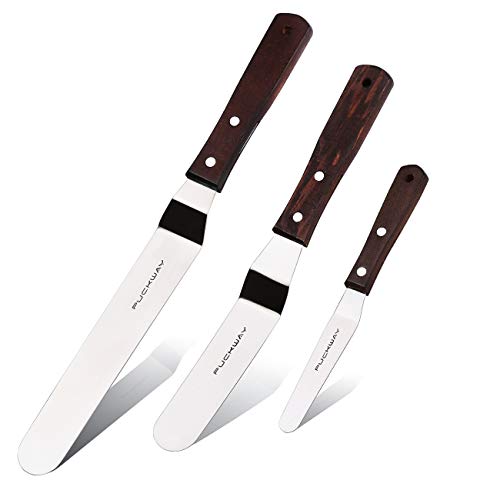
- Rubber spatula and small spatula for loosening and frosting the layers
- Wire cooling racks
- Plain white serving plate
- Three wooden skewers, optional for stability
 Buy Now →
  Buy Now →
  Buy Now →
  Buy Now →
  Buy Now →
  Buy Now →
  Buy Now →
  Buy Now →
  Buy Now →
  Buy Now →
  Buy Now →
Ingredients You'll Need
For the chocolate cake
The cake uses sweet baking chocolate and buttermilk, with whole eggs beaten directly into the butter and sugar.
- 1 package (4 oz.) BAKER'S GERMAN'S Sweet Chocolate
- ½ cup water
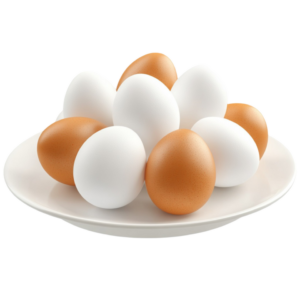
- 4 eggs
- 2 cups flour
- 1 teaspoon baking soda
- ½ teaspoon kosher salt
- 1 cup butter, softened
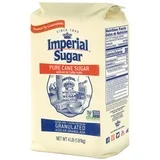
- 2 cups sugar
- 1 teaspoon vanilla bean paste
- 1 cup buttermilk
For the coconut-pecan frosting
Egg yolks and evaporated milk form the cooked custard base. Add the pecans during the last few minutes of cooking, then stir in the coconut off the heat.
- 6 egg yolks
- 1 ½ cans evaporated milk, using 12-ounce cans
- 3 cups sugar
- 1 ½ cups butter (3 sticks), cut into small pieces
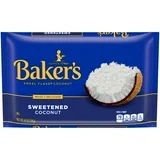
- 1 bag (14 oz.) Baker's Angel Flake Coconut
- 3 cups chopped pecans
- 1 tablespoon vanilla bean paste
 Buy Now →
  Buy Now →
  Buy Now →
  Buy Now →
  Buy Now →
  Buy Now →
  Buy Now →
  Buy Now →
  Buy Now →
  Buy Now →
  Buy Now →
  Buy Now →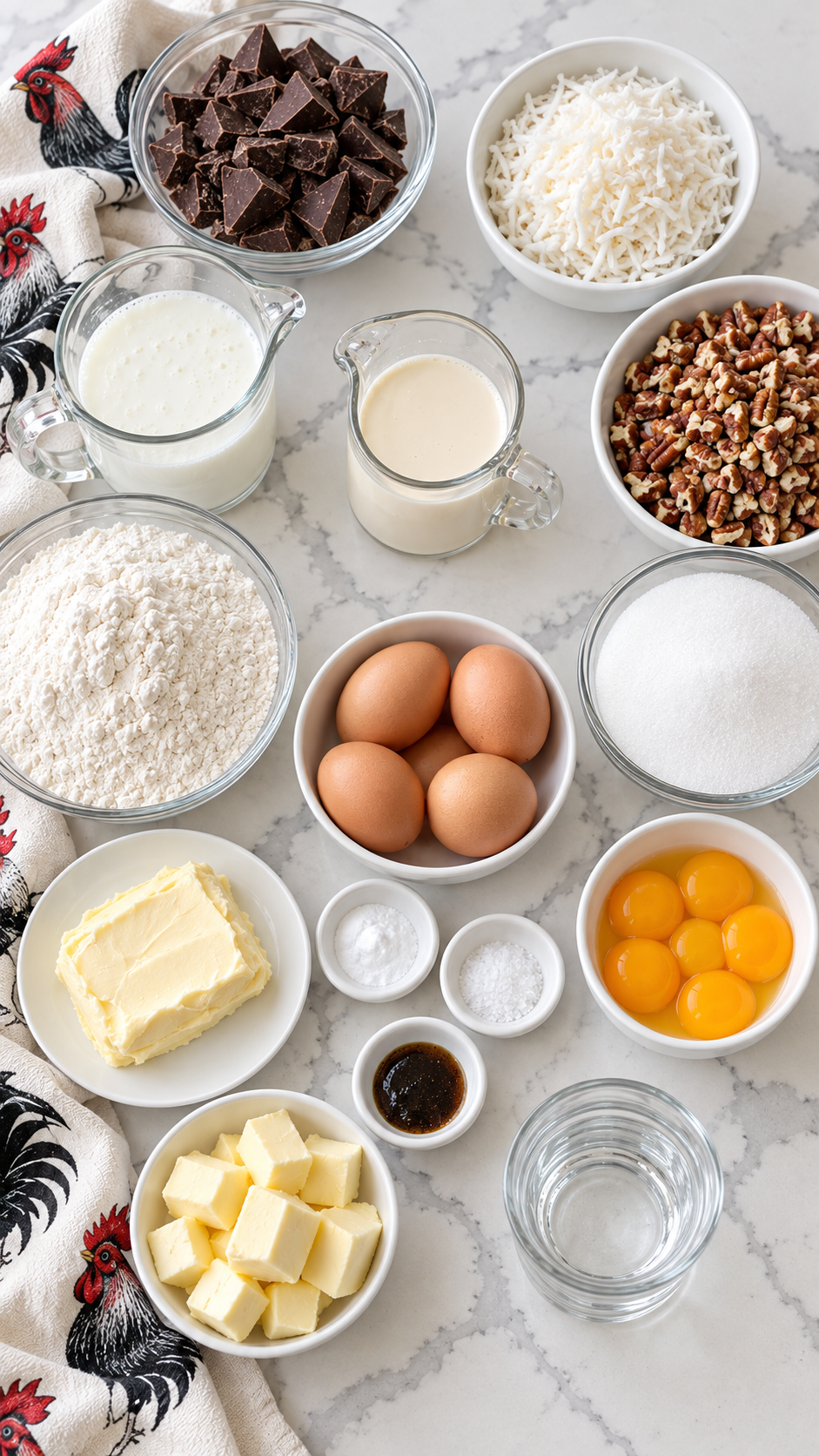
A Few Ingredient Notes
Evaporated milk: Use one full 12-ounce can plus half of another can. Evaporated milk and sweetened condensed milk are different ingredients; use evaporated milk here.
Vanilla bean paste: Replace it with an equal amount of vanilla extract if needed. You can also read about my homemade vanilla bean paste.
Chocolate: The supplied substitute is 4 ounces of semisweet or dark chocolate plus 1 tablespoon of sugar. For buttermilk, mix 1 cup of milk with 1 tablespoon of lemon juice or white vinegar and let it stand for 5 minutes. Any sweetened shredded coconut may replace the Baker's coconut.

How to Make German Chocolate Cake
1. Prepare the batter
Heat the oven to 350°F. Line the bottoms of three 9-inch round pans with parchment paper and spray the sides with non-stick cooking spray.


Microwave the chocolate and ½ cup water on HIGH for 1 ½ to 2 minutes. Stir after 1 minute; continue until the chocolate is almost melted, then stir until smooth. In a medium bowl, combine the flour, baking soda, and kosher salt.


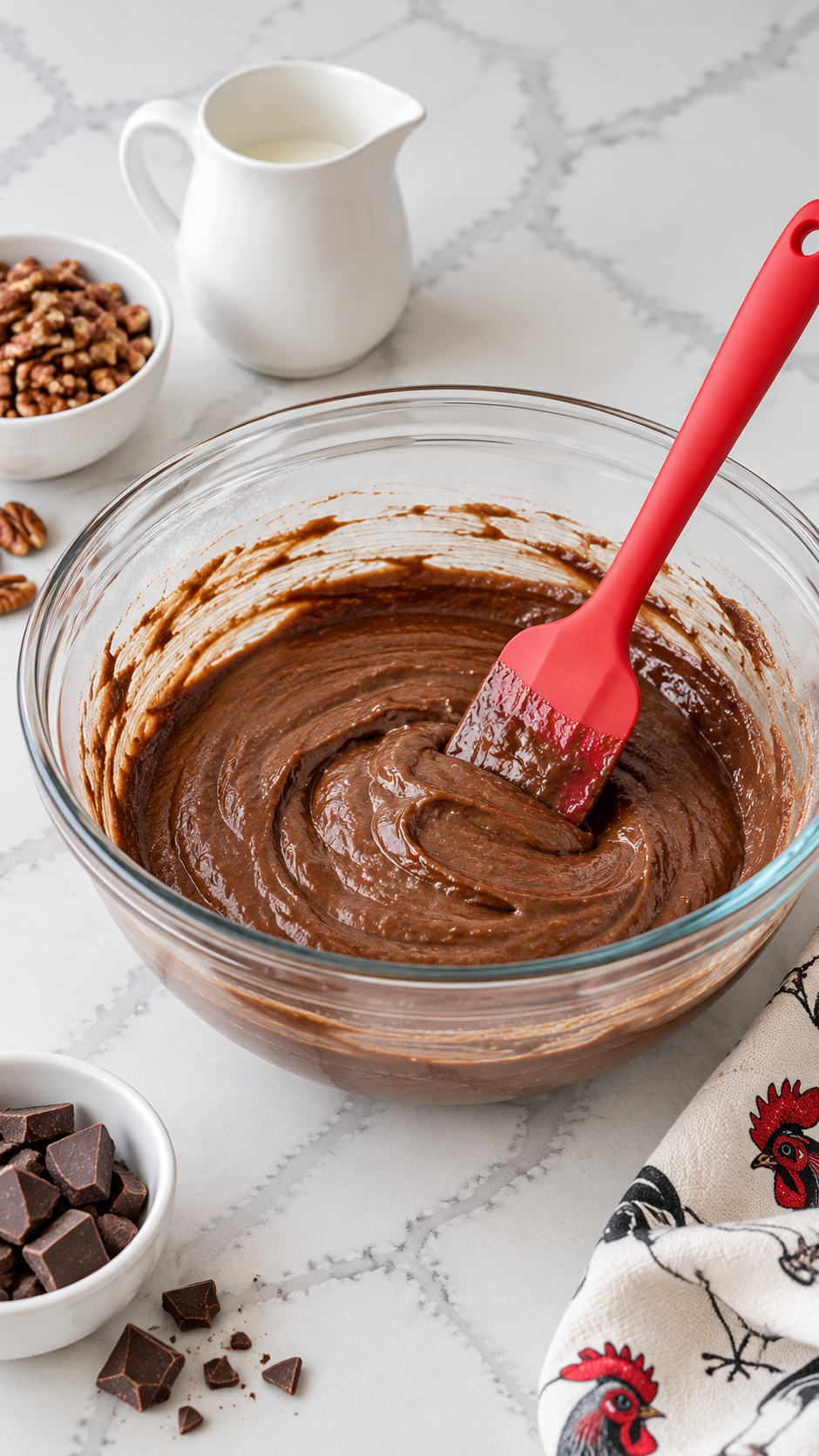
Beat the softened butter and sugar until light and fluffy. Add the four whole eggs one at a time, beating well after each addition. Blend in the melted chocolate and vanilla bean paste.


Add the flour mixture alternately with the buttermilk, beginning and ending with the flour. Beat until well blended, scraping the bowl as needed so no dry pockets remain.


No whipped egg whites needed: This tested version uses whole eggs beaten into the butter and sugar. The six egg yolks in the ingredient list belong to the frosting.
2. Bake and cool the layers
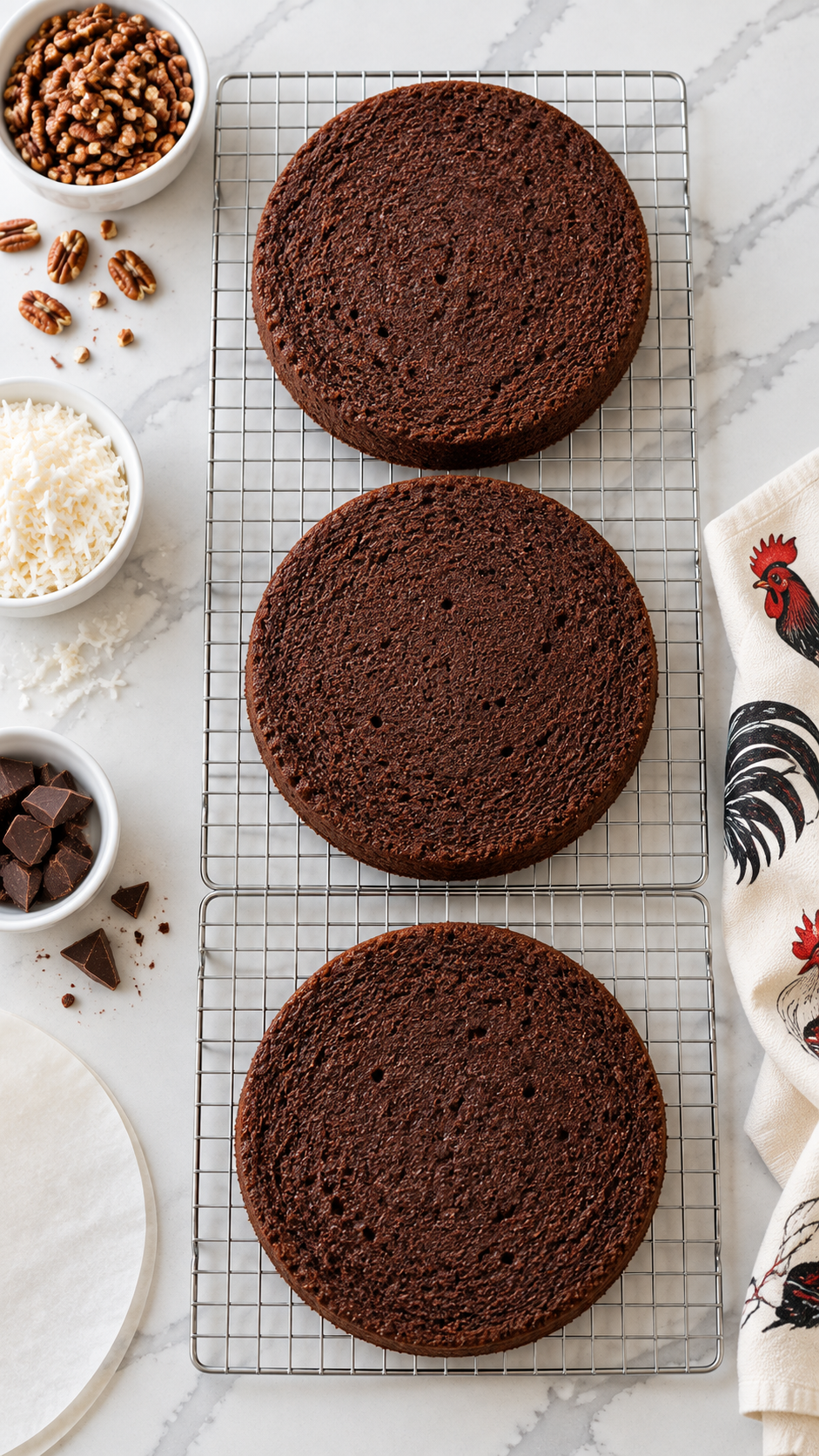
Divide the batter evenly among the prepared pans. Spread it toward the edges so the layers bake at a similar rate.


Bake for 20-30 minutes, until a toothpick inserted in the center comes out clean. Immediately run a small spatula around the edges. Let the layers cool in their pans for 15 minutes, then transfer them to wire racks to cool completely. Prepare the frosting while they cool.


3. Cook and cool the frosting
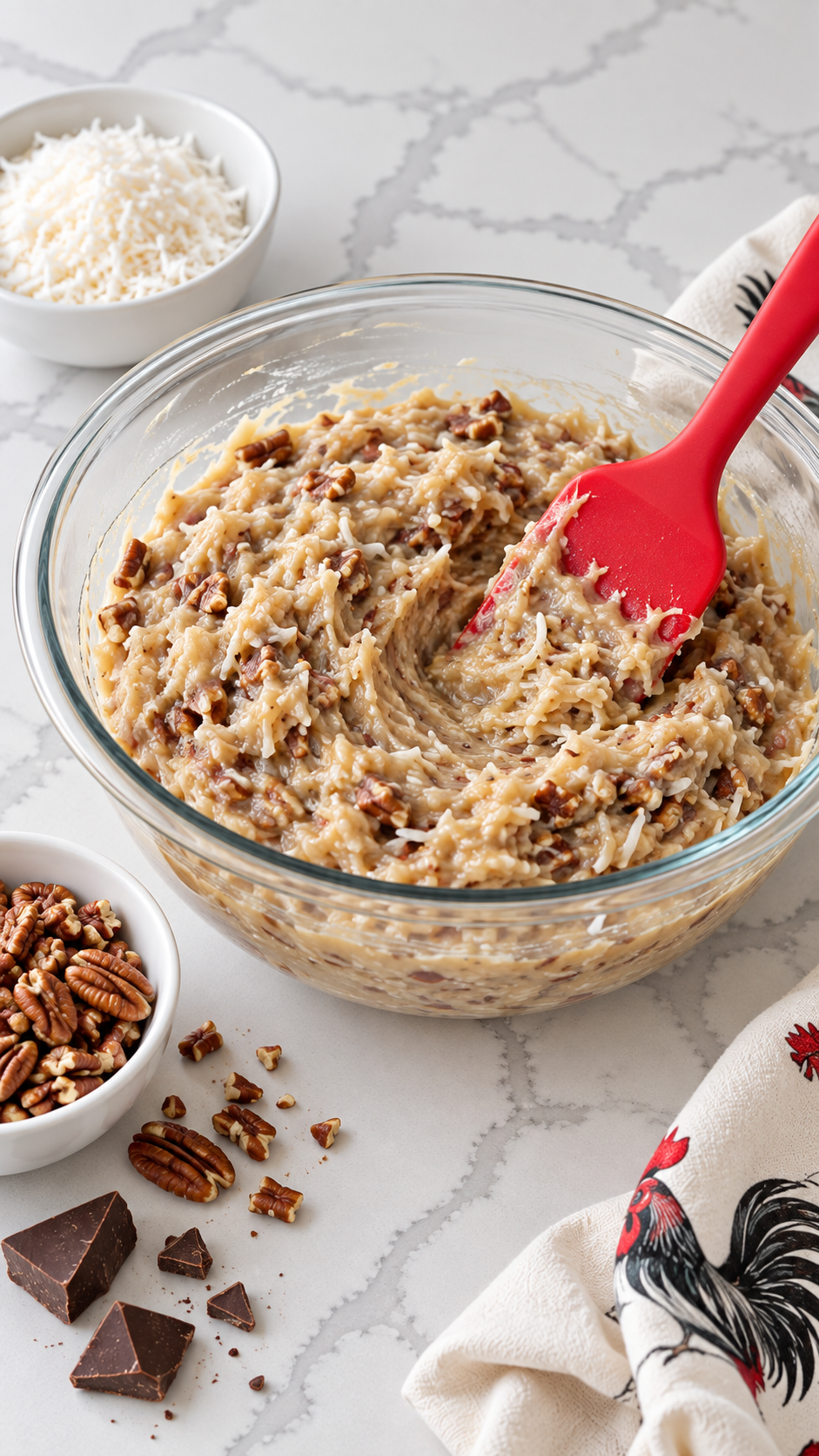
Whisk the six egg yolks and evaporated milk together in a large saucepan until blended. Add the sugar and butter pieces. Cook over medium heat, stirring constantly, for about 10 minutes.


Add the chopped pecans and cook for another 2-3 minutes, continuing to stir as the custard thickens. This gives the pecans time in the warm custard before the coconut goes in.


Remove the pan from the heat and stir in the coconut and vanilla bean paste. Let the frosting cool until it is spreadable. It should hold where you spread it instead of running off the cake; do not assemble with hot frosting.


4. Fill and frost the cake
Remove the parchment from the cooled cake layers. Set the first layer on your serving plate and spread a generous layer of frosting all the way to its edges.
Add the second cake layer and another generous layer of frosting. Place the final layer on top, then use the remaining frosting to cover the top and sides, filling the gaps as you go.
For added stability, trim three wooden skewers to the height of the cake and insert them in a triangle, fully below the top surface. Keep track of all three: remove and discard them while cutting, before handing out slices.
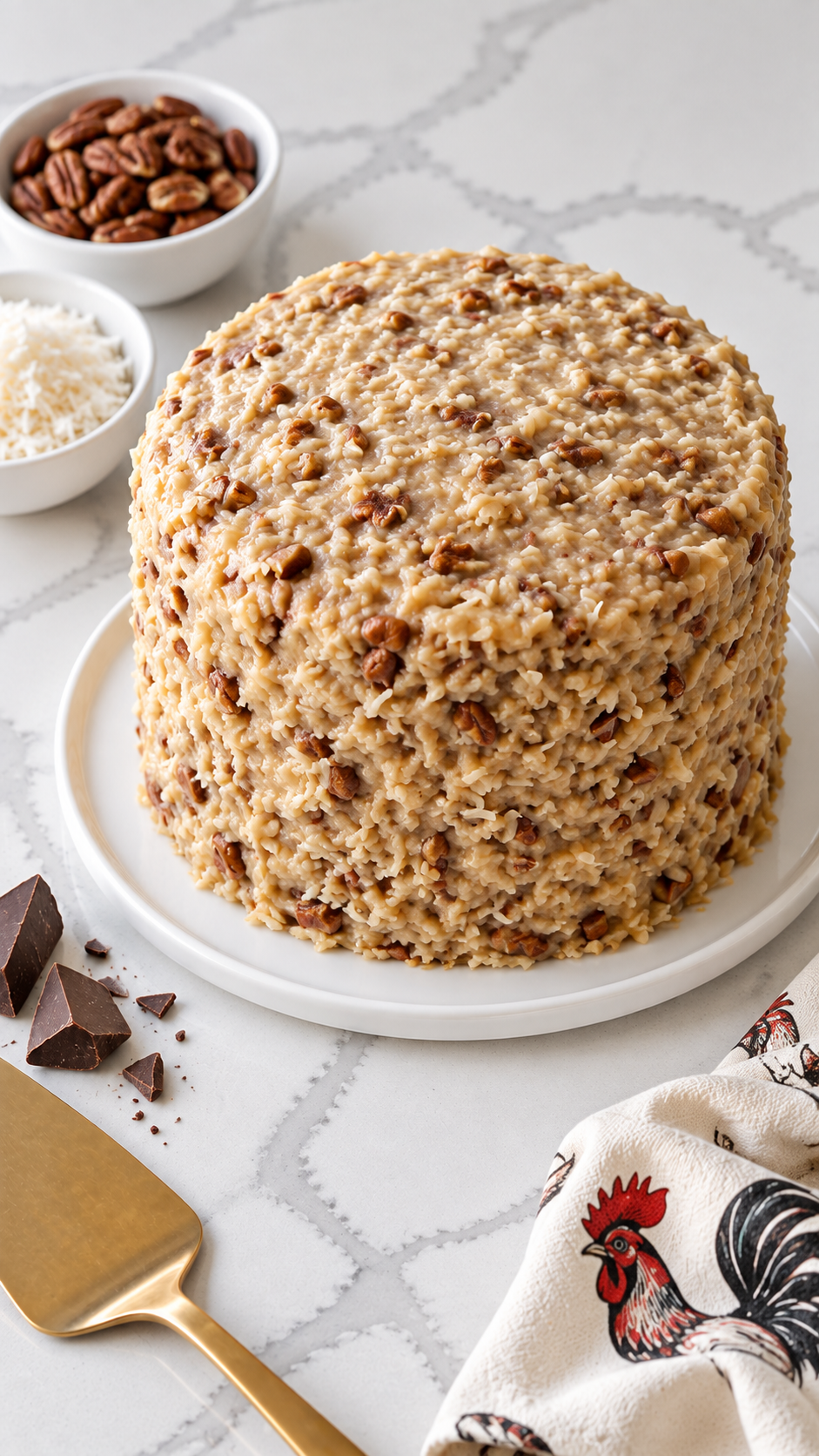
The finished cake should be covered with coconut-pecan frosting on the top and sides. Its naturally textured finish is part of its charm; it does not need a chocolate buttercream border.


This post may contain affiliate links. I may receive commissions for purchases made through links in this post.
Visit my Amazon Store for everything you need to cook up a storm, bake delicious treats, and whip up your favorite beverages!
Tips for Tender Layers and Frosting That Stays Put
Let everything cool before stacking
Cool layers and spreadable frosting are the best starting point for a steady cake. If the frosting flows off a spatula, give it more cooling time before you spread it. A warm layer can soften the frosting underneath it.
Melt the chocolate gently
Stop microwaving when the chocolate is almost melted, then stir until smooth. The remaining warmth helps melt the last pieces without extra heating. Use the sweet baking chocolate specified in the recipe; there is no added cocoa powder or coffee in this batter.
Keep the batter balanced
Use the butter and buttermilk amounts as written. Alternate the dry mixture with the buttermilk so the batter combines evenly, and stop once it is well blended. Replacing butter with oil changes this tested recipe.
Give the frosting your attention
Stir continuously while the egg-yolk custard cooks, reaching the bottom and corners of the saucepan. Keep the heat at medium. The pecans go in for the final 2-3 minutes; the coconut and vanilla bean paste go in after you remove the pan from the heat.
Measure first and use the cooling time
Measure the frosting ingredients before you begin cooking it so you can keep stirring. Make the frosting while the baked layers cool, then wait until both components are ready before assembly.
Let the coconut-pecan frosting be the finish
Spread the frosting into gaps between layers and over the whole cake. A few irregular swirls and visible shreds of coconut suit this homemade cake. Keep the top free of extra toppings so it matches the recipe as tested.

The Story and Culture Behind German Chocolate Cake
German Chocolate Cake is one of those desserts that feels like it has deep, old-world roots, but surprisingly, it's as American as apple pie. Its name isn't a nod to Germany but to Samuel German, an English-American chocolatier who, in 1852, developed a sweet baking chocolate for Baker's Chocolate Company. This mild and slightly sweet chocolate became a staple in kitchens, offering a softer chocolate flavor that appealed to a wide range of tastes.
The real turning point for this cake came in 1957 when a homemaker in Dallas submitted her recipe for "German's Chocolate Cake" to a local newspaper. Her version, featuring tender chocolate layers and a creamy coconut-pecan frosting, caused a sensation. Before long, it was popping up at potlucks, family gatherings, and celebrations across the country. Over time, the possessive "German's" was dropped, and it became known simply as German Chocolate Cake, leaving many to believe it hailed from Europe.

A True American Classic
This cake pairs a gently chocolate-flavored crumb with a rich cooked coconut-pecan frosting. The contrast between tender layers and chewy coconut with chopped pecans makes it different from a plain chocolate layer cake.
The frosting, often called coconut-pecan filling, is what really sets this cake apart. It's more like a custard than a traditional frosting and is spread generously over the top of the cake, the sides of the cake, and between the layers. This not only gives the cake its signature look but ensures every bite is packed with flavor and texture.
What Makes This Version Different
This recipe uses three 9-inch layers, whole eggs in the cake batter, and enough coconut-pecan frosting to cover the sides as well as the filling and top. The sweet chocolate bar, buttermilk, and vanilla bean paste are all part of that tested combination.
What to Serve with a Slice
A small slice is rich enough to serve on its own. Coffee or a glass of milk makes a simple pairing, and plain vanilla ice cream is a nice extra if you want one.
For a dessert table, Chocolate Coconut Balls carry the chocolate-and-coconut theme into a small bite. If you are choosing another layer cake for a celebration, my Red Velvet Cake offers a different frosting and flavor.
Making It Ahead and Storing Leftovers
Can I bake the layers ahead? Yes. Bake the unfrosted layers up to two days ahead. Let them cool completely before wrapping so you do not trap warmth and condensation.
How should I store the frosted cake? Keep the cake covered in the refrigerator because it has a cooked egg-and-milk frosting. Refrigerate leftovers promptly and bring out only the portions you plan to serve. Let chilled slices soften briefly before serving for a softer crumb.
Can I freeze it? Wrap and freeze individual slices for up to three months. Protect the frosting from being crushed, wrap tightly, and thaw covered in the refrigerator before serving.
A Couple of Common Questions
Why is my frosting runny? Warm frosting is softer than cooled frosting. Give the cooked mixture time to cool to a spreadable consistency. If it never thickened during cooking, cooling alone may not fix an undercooked custard; do not stack the cake while the frosting runs off the layers.
Do I need to whip the egg whites? No. Follow this recipe's whole-egg method for the cake. Separate yolks are used only in the frosting.
More Nostalgic Cake Recipes
If you're a fan of nostalgic cakes like German Chocolate Cake, there are plenty of other classic recipes worth adding to your baking repertoire. Each one brings its own story and comforting flavors to the table.
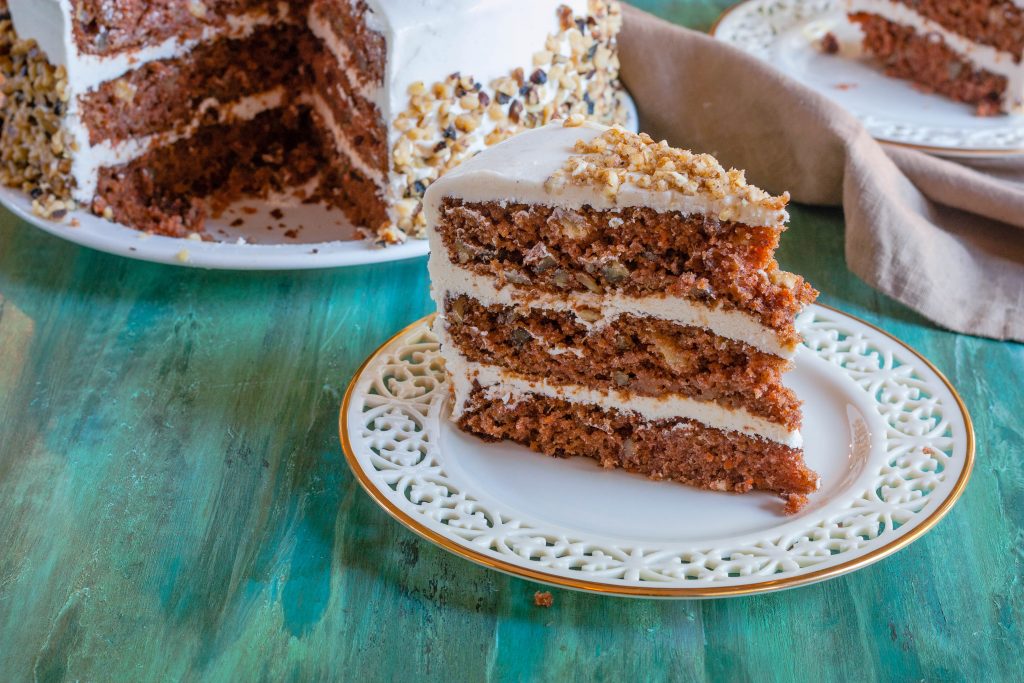
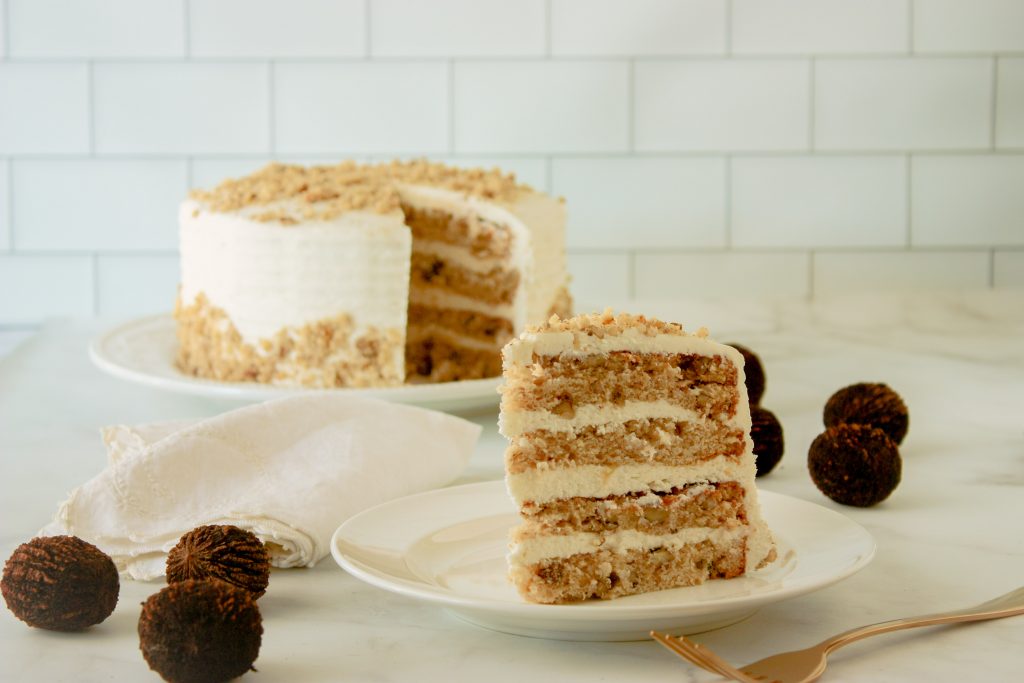
Homemade Carrot Cake is a timeless favorite, packed with warm spices, grated carrots, pineapple, and a rich cream cheese frosting that perfectly balances its sweetness.

Sticky Toffee Pudding, technically a cake, is a British dessert with a moist date-based sponge drenched in a rich, buttery toffee sauce and served warm. I'll admit, I was hesitant to try it at first-something about the name just didn't sound appealing. But the moment I finally gave it a chance, it completely won me over! A talented chef and restaurateur once shared his recipe with me straight from his menu, and let me tell you, it's the best version I've ever had. This dessert is pure comfort and absolutely worth the try!

Pineapple Upside Down Sheet Cake offers a retro flair with caramelized pineapple rings and maraschino cherries topping a buttery, golden cake.
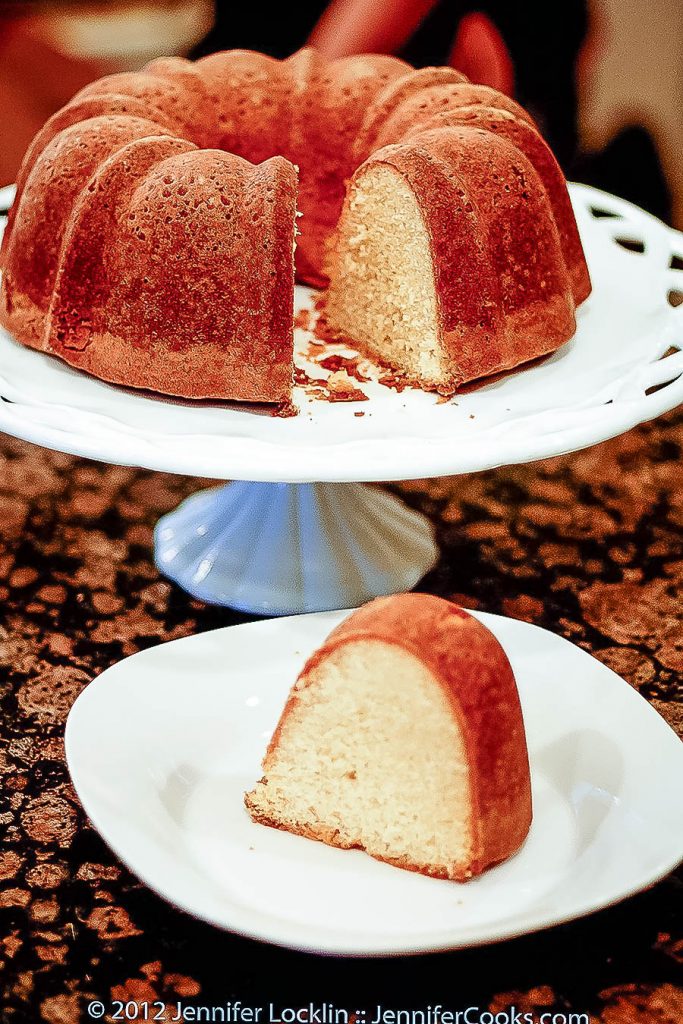
Buttermilk Pound Cake is a simple yet elegant option, known for its dense, buttery crumb and subtle tang from the buttermilk, making it a perfect pairing with coffee or tea.
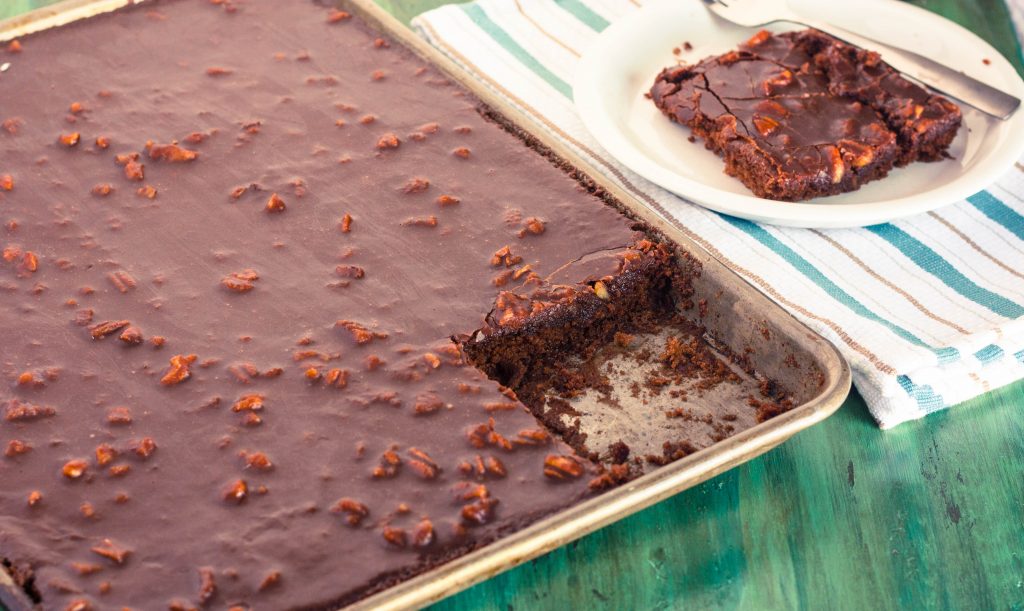
Texas Sheet Cake is a chocolate lover's dream-a thin, fudgy cake topped with a warm cocoa frosting that's poured over the top while still hot, giving it an irresistible glossy finish.
Each of these cakes brings back memories of celebrations, family gatherings, and the joy of homemade treats. Give them a try and add a little nostalgia to your dessert table!
Homemade German Chocolate Cake
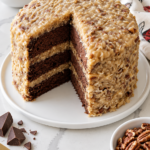
Tender chocolate cake layers are generously filled and frosted with buttery coconut-pecan custard for a nostalgic, from-scratch cake made for celebrating.
- Prep Time: 15 minutes
- Cook Time: 30 minutes
- Total Time: 45 minutes
- Yield: 16 servings 1x
- Category: Dessert
- Method: Baking
- Cuisine: American
Ingredients
Cake:
- 1 package (4 oz.) BAKER'S GERMAN'S Sweet Chocolate
- ½ cup water
- 4 eggs
- 2 cups flour
- 1 teaspoon baking soda
- ½ teaspoon kosher salt
- 1 cup butter, softened
- 2 cups sugar
- 1 teaspoon vanilla bean paste
- 1 cup buttermilk
Coconut-Pecan Frosting:
- 6 egg yolks
- 1 ½ cans (12 oz. each) evaporated milk
- 3 cups sugar
- 1 ½ cups butter (3 sticks), cut into small pieces
- 1 bag (14 oz.) Baker's Angel Flake Coconut
- 3 cups chopped pecans
- 1 tablespoon vanilla bean paste
Instructions
Preheat the Oven
- Heat the oven to 350°F.
Prepare the Cake Pans
- Cover the bottoms of three 9-inch round pans with parchment paper.
- Spray the sides with non-stick cooking spray.
Melt the Chocolate
- Microwave the chocolate and water in a large microwaveable bowl on HIGH for 1 ½ to 2 minutes.
- Stir after 1 minute, then continue heating until the chocolate is almost melted. Stir until smooth.
Mix the Dry Ingredients
- In a medium bowl, combine the flour, baking soda, and salt.
Cream the Butter and Sugar
- In a large bowl, beat the butter and sugar with a mixer until light and fluffy.
- Add the eggs, one at a time, beating well after each addition.
- Blend in the melted chocolate and vanilla bean paste.
Combine and Mix the Batter
- Gradually add the flour mixture, alternating with the buttermilk, starting and ending with the flour.
- Beat until the mixture is well blended.
Bake the Cakes
- Pour the batter evenly into the prepared pans.
- Bake for 20-30 minutes, or until a toothpick inserted in the center comes out clean.
- Run a small spatula around the edges of the cakes in the pans immediately after baking.
- Cool the cakes in the pans for 15 minutes, then transfer them to wire racks to cool completely.
Prepare the Frosting
- Follow the instructions for the Coconut-Pecan Frosting while the cakes cool.
Cook the Base
- In a large saucepan, whisk the egg yolks and evaporated milk until well blended.
- Add the sugar and butter pieces.
Cook to Thicken
- Place the saucepan over medium heat, stirring constantly, for about 10 minutes.
- Add the chopped pecans to the saucepan and continue cooking for an additional 2-3 minutes, allowing the pecan flavor to bloom into the custard as it thickens.
Finish the Frosting
- Remove the pan from the heat.
- Stir in the coconut and vanilla bean paste.
- Let the frosting cool until it reaches a spreadable consistency.
Assembling the Cake
- Layer the Cake: Place the first cake layer on a serving plate. Spread a generous layer of frosting over the top, making sure it reaches the edges.
- Repeat with Layers: Add the second cake layer and spread another layer of frosting on top. Place the final layer on top and cover the top and sides of the cake with the remaining frosting. Use a spatula to smooth the frosting and ensure all gaps are filled.
- Stabilize the Cake: For added stability, take three wooden skewers and trim them to match the height of the cake. Insert them in a triangular pattern, ensuring they are fully submerged below the surface of the top layer. This will keep the layers from sliding and can be easily removed and discarded as you slice and serve the cake.
Notes
Evaporated milk: use one full 12-ounce can plus half of a second 12-ounce can; this is not sweetened condensed milk.
Chocolate substitute: use 4 oz. semisweet or dark chocolate and add 1 tablespoon of sugar.
Buttermilk substitute: use 1 cup of milk mixed with 1 tablespoon lemon juice or white vinegar; let stand for 5 minutes.
Replace vanilla bean paste with an equal amount of vanilla extract. Any sweetened shredded coconut may replace Baker's Angel Flake Coconut.
Prep time is 15 minutes and baking is up to 30 minutes. Allow additional time for complete cooling, frosting preparation, and assembly.
Nutrition
- Calories: 746
- Sugar: 65
- Sodium: 405
- Fat: 47
- Saturated Fat: 21
- Carbohydrates: 79
- Fiber: 2
- Protein: 7
- Cholesterol: 192



Comments
No Comments